
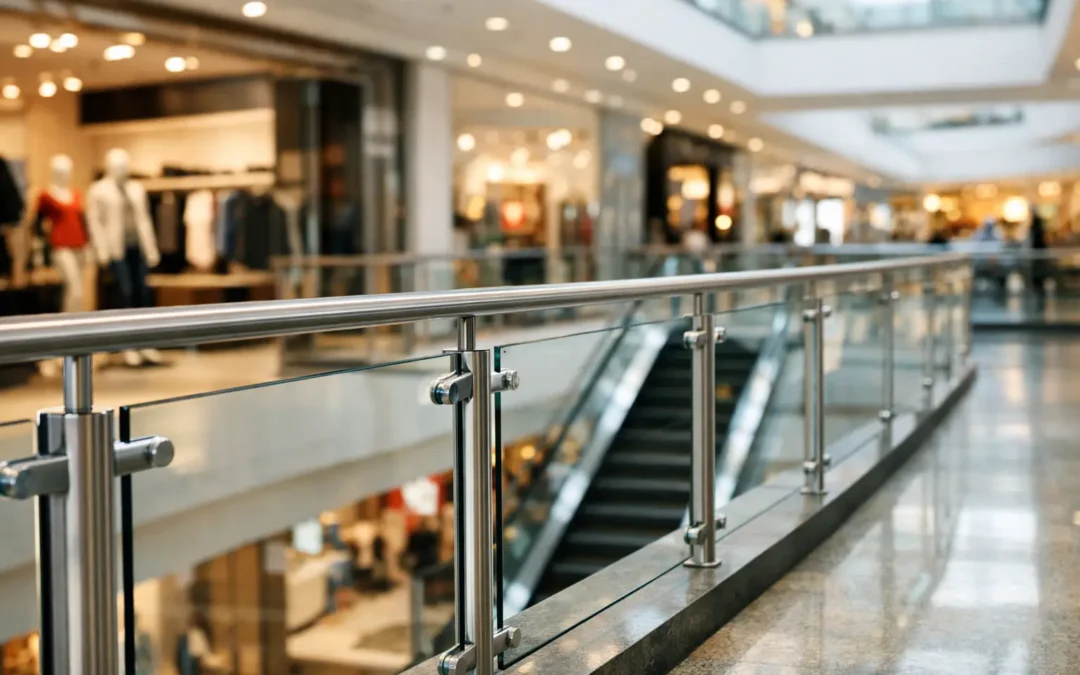
A retail space gets judged fast. Before a customer looks at your product mix, signage, or service desk, they notice how the space feels to move through. That is why commercial railing systems for retail stores do more than protect edges and guide foot traffic. They shape first impressions, support code compliance, and help the entire store feel intentional.
For store owners, developers, and contractors, railing decisions usually show up late in the process, even though they affect safety, layout, visibility, and brand presentation from day one. A poorly chosen system can make a clean space feel heavy, disrupt product sightlines, or create installation problems that slow down an opening. The right system does the opposite. It adds structure without visual clutter and performs well under daily wear.
What retail railings are really expected to do
In a retail setting, railings work hard. They protect customers on stairs, mezzanines, elevated walkways, and platform changes. They define circulation zones, help organize traffic, and support accessibility planning. Just as important, they need to hold up in a public-facing environment where finishes are touched constantly, carts and merchandise can make contact, and cleaning happens often.
That combination of demands is what makes retail different from a standard residential installation. A system may need to balance transparency with impact resistance, or sleek design with easier maintenance. It also has to fit the pace of a commercial project, where drawings, approvals, engineering review, fabrication, and installation all need to stay coordinated.
Choosing commercial railing systems for retail stores
There is no single best railing for every retail project. The right choice depends on the store format, customer traffic, interior style, and how visible the railing will be within the overall design.
Glass railings for open, modern retail environments
Glass railings are often the strongest fit when visibility matters. In apparel stores, showrooms, malls, and multi-level boutiques, they keep sightlines open and help the space feel brighter and larger. Customers can see merchandise, feature displays, and architectural details without interruption.
This is especially useful around stair openings, upper-level perimeters, and interior balcony edges. A well-made glass system can feel minimal while still delivering the required protection. The trade-off is maintenance. Glass shows fingerprints and smudges more easily than metal-only systems, so cleaning expectations should be part of the decision early.
Aluminum railings for efficiency and clean lines
Aluminum is a practical option for many retail properties because it combines a modern look with lower maintenance. It performs well in interior and exterior applications, resists corrosion, and can be finished in a range of colors to match storefront design.
For projects where budget matters but appearance still needs to feel sharp and contemporary, aluminum often makes sense. It is not always the most premium visual statement, especially in luxury retail, but it can be the right answer for plazas, service corridors, exterior stairs, and high-traffic tenant spaces that need dependable performance.
Stainless steel and wrought iron for impact and durability
Stainless steel railings bring a more architectural, commercial-grade feel. They work well in upscale stores, mixed-use buildings, and retail settings where durability and a polished finish are priorities. Wrought iron, on the other hand, adds more visual character and can support a custom design language that feels distinctive rather than standard.
The decision here usually comes down to brand image and project style. Stainless steel leans crisp and modern. Wrought iron can be more expressive and decorative. Both can be fabricated to suit demanding commercial use, but they create very different impressions.
Design matters as much as code
Retail owners usually start with appearance, and that is understandable. The railing is visible. It contributes to the store’s look. But commercial projects have to be approached with code and constructability in mind from the beginning.
A railing system needs to meet applicable height, spacing, load, and handrail requirements. Depending on the project, that may also involve engineered drawings, stamped reviews, landlord approvals, or permit coordination. If those items are treated as an afterthought, the project can get expensive quickly.
That is why a disciplined process matters. Accurate site measurement, job-specific drawings, client approvals, engineering review where required, and coordinated fabrication reduce surprises later. For retail construction, that is not just good practice. It protects timelines.
Where commercial railing systems for retail stores make the biggest difference
Some retail projects need railings in obvious locations, like staircases and upper-level edges. Others benefit from them in more subtle ways.
In-store stairs are one of the clearest examples. Customers need to feel secure using them, and the railing becomes part of the journey between levels. If the stair feels dark or closed in, traffic can hesitate. If it feels open, solid, and easy to navigate, the entire layout works better.
Mezzanines and overlook areas also benefit from thoughtful railing design. In these spaces, the railing often sits directly in the customer sightline. Heavy materials or bulky detailing can make the upper floor feel disconnected. Cleaner systems keep the level visually engaged with the rest of the store.
Exterior entry stairs and ramps deserve just as much attention. These are often the first physical touchpoint a customer has with the property. A fading or poorly fitted railing sends the wrong message before anyone enters the building.
Balancing aesthetics, durability, and maintenance
Every retail project has trade-offs. A glass railing may deliver the cleanest look but require more frequent cleaning. A painted metal system may offer the right design detail but need more finish care over time than powder-coated aluminum or stainless steel. A highly customized design may elevate the space, but it also requires tighter coordination during approvals and fabrication.
The key is to choose based on actual use, not just inspiration images. A luxury showroom, a busy grocery-adjacent retail unit, and a fashion boutique should not all default to the same solution. Customer traffic, staff operations, exposure to weather, cleaning routines, and brand presentation all matter.
Working closely with a fabrication and installation partner helps clarify those choices. When the conversation includes design intent, material performance, engineering requirements, and installation logistics, the result tends to look better and last longer.
Why custom fabrication often outperforms off-the-shelf systems
Retail spaces rarely behave like standard templates. Floor conditions vary. Sightlines matter. Tenant improvements have existing constraints. Landlords may have design standards. Architects may want a specific finish, profile, or attachment detail.
That is where custom fabrication becomes valuable. Instead of forcing a stock system into a space, the railing is designed around the project. The dimensions are measured accurately. Drawings reflect the actual site. Approval happens before production. The finished system looks intentional because it was built for that exact location.
For clients who want a strong design result without risking delays, that process creates confidence. It also supports better installation quality. When parts are fabricated to suit the real conditions, installers can focus on fit and finish rather than making field adjustments that compromise the final look.
At Iron & Glass Designs, that full-service approach is central to how commercial projects are delivered – from site visit and measurement to drawings, engineering review, fabrication, and on-time installation.
What to ask before you approve a railing package
Before moving forward, ask how the system will affect visibility, traffic flow, maintenance, and compliance. Ask whether the design has been reviewed for the actual site conditions. Ask what finish is best for the environment and level of public use. And ask who is responsible for coordinating measurement, drawings, engineering, fabrication, and installation.
Those questions matter because retail construction leaves little room for guesswork. A railing is not just an accessory. It is part of the built experience your customers interact with every day.
The best commercial railing systems for retail stores feel simple once they are installed. They look clean, perform reliably, and fit the space as though they were always meant to be there. That kind of result usually comes from careful planning, quality materials, and a team that understands both craftsmanship and execution.
If you are planning a new store, renovating an existing location, or upgrading a high-traffic commercial property, treat the railing as part of the customer experience, not just a code item. When design and function are handled together, the whole space feels more polished, more secure, and more ready for business.