
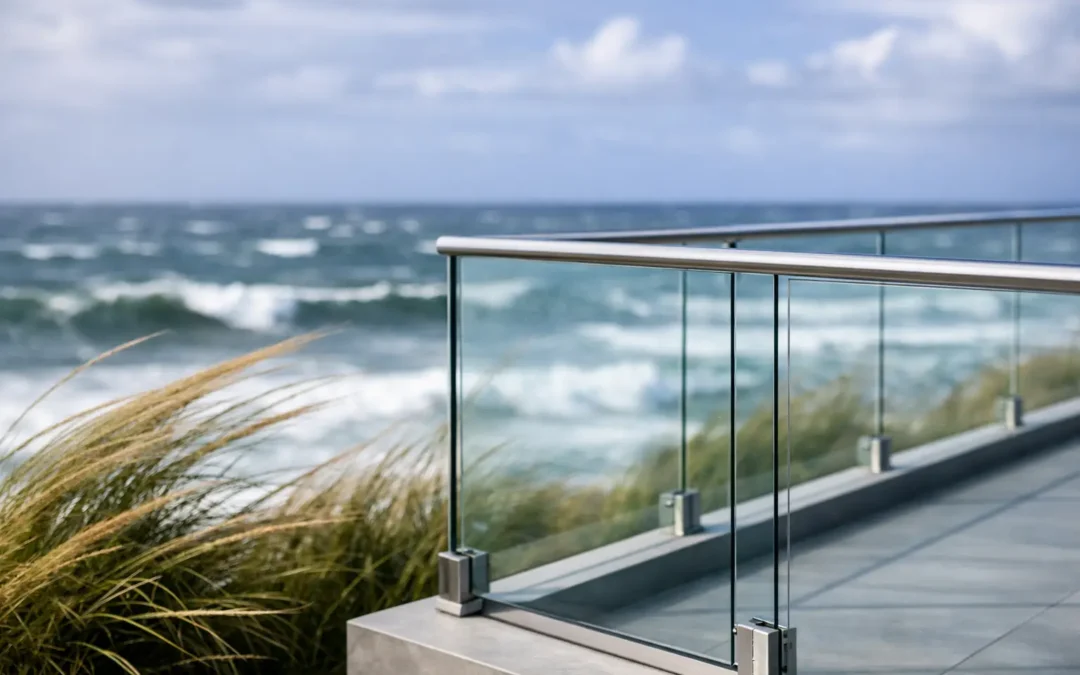
A glass railing can look light and minimal, but wind does not treat it lightly. On an exposed balcony, roof deck, or elevated terrace, the force pushing against a guard system can be significant. That is why glass railing wind load requirements matter so much. They are not a detail to sort out late in the project. They shape the glass thickness, panel size, hardware, anchoring, and the engineering behind the entire system.
For homeowners, builders, and property investors, this is where a good-looking idea either becomes a safe, buildable installation or runs into expensive redesigns. The right approach is to treat wind load as part of the design from the start, not as a box to check once the drawings are done.
What glass railing wind load requirements actually mean
Wind load requirements are the performance standards a railing system must meet when wind pushes or pulls on it. In practical terms, the glass, posts, base shoe, spigots, fasteners, and structural anchors all need to resist those forces without failing, loosening, or deflecting beyond acceptable limits.
This is especially important for exterior applications. Interior stair railings still have code and safety requirements, but a balcony guard several stories up faces a different kind of demand. The higher and more exposed the location, the more pressure the system may need to handle.
The phrase sounds technical because it is, but the real-world question is simple: can this railing safely stand up to the wind conditions at this exact property? The answer depends on more than the glass itself.
Why wind load is not one-size-fits-all
Two glass railings can look almost identical and require very different engineering. A backyard deck with surrounding walls and trees may experience far less wind pressure than a rooftop terrace on a mid-rise building. The same clean, frameless appearance may call for thicker laminated tempered glass, heavier base channels, or more demanding anchor design in one location than in another.
That is where many assumptions go wrong. People often think selecting a style is the main decision, then assume the installer will make it work. In reality, the style has to be matched to the structural conditions, exposure, height, occupancy, and local code requirements.
A corner condition can change the math. A long uninterrupted span can change it too. Even the substrate matters. Concrete, steel, and wood framing each present different anchoring conditions, and those conditions directly affect whether a railing design will meet required performance.
The main factors engineers look at
When evaluating glass railing wind load requirements, engineers are not just asking how strong the wind might be. They are looking at how the whole assembly behaves under load.
Glass type is a major factor. Not all glass used in railing systems performs the same way. For many exterior guards, laminated tempered glass is preferred because it offers strength and post-breakage retention that monolithic glass cannot provide in the same way. Thickness also matters, and it is usually driven by span, support conditions, and required performance rather than aesthetics alone.
Support method is equally important. A framed glass railing, a top-mounted post system, and a frameless base shoe system distribute forces differently. Frameless systems create a striking modern look, but they are less forgiving when wind loads are high and engineering is not properly resolved. That does not make them a bad choice. It just means the structure and hardware need to be selected with more precision.
Panel dimensions also affect performance. Larger panels can increase visual openness, but they may require thicker glass or stronger support because bigger surfaces catch more wind. Sometimes a design adjustment that slightly reduces panel width leads to a better structural result without changing the overall look.
Then there is anchorage. The railing is only as reliable as the way it is connected to the building. Beautiful hardware means very little if the edge slab, blocking, weld points, or fastener layout are not designed for the loads being transferred.
Code compliance is only part of the picture
Building code sets the baseline, but code language does not replace project-specific engineering. This is where property owners and even some contractors can get caught off guard. A railing product may be marketed as code-compliant, yet that does not mean it is automatically suitable for every site or every wind exposure.
Compliance depends on how the system is used. The same product can perform well in one application and fall short in another if the span is too long, the anchors are different, or the building sits in a more demanding wind environment.
That is why engineered drawings and stamped reviews are so valuable on these projects. They move the decision from assumption to documented performance. For a homeowner, that means fewer surprises. For a builder or commercial client, it means a smoother path through approvals and a lower risk of field changes.
Common design mistakes that create problems
One common mistake is choosing glass thickness based on appearance or budget before the loading is reviewed. Thinner glass may reduce upfront cost, but if the application calls for more strength, that decision can trigger delays, redesign fees, and replacement costs.
Another issue is underestimating the exposure of the site. A second-floor deck may seem straightforward until you account for open surroundings, directional wind, or an elevated corner location. What feels protected at ground level may behave very differently at guard height.
There is also the temptation to copy a detail from another project. That rarely works well with exterior glass railings. Similar dimensions do not mean similar loads. Every site has its own conditions, and every supporting structure has its own limitations.
Finally, some projects focus heavily on the glass and not enough on the supporting structure. If the framing or slab edge was not planned for the railing loads, the cleanest design in the world can become difficult to execute properly.
How a well-run process protects the project
The best results come from a process that ties design, measurement, engineering, fabrication, and installation together from the beginning. That is especially true for custom exterior railings where wind load performance is not optional.
It starts with a site-specific review. Accurate field measurements matter, but so does understanding the installation surface, edge conditions, elevations, and exposure. From there, project drawings should reflect not only the look the client wants, but also the structural reality of the space.
After client approval, engineering review helps confirm that the selected system can meet the required loads. If adjustments are needed, it is better to make them on paper than after fabrication. This is where experience pays off. A team that works closely with clients can preserve the design intent while still making responsible technical decisions.
Once the engineering is resolved, fabrication and installation become much more predictable. That means fewer jobsite improvisations, cleaner results, and a railing that feels as solid as it looks.
Choosing the right glass railing system for windy locations
For properties with higher exposure, the best system is not always the most minimal one on first glance. Sometimes a framed or posted design offers the right balance of openness, strength, and cost. In other cases, a frameless system is absolutely achievable, but it requires heavier structural support and a more engineered hardware package.
That trade-off matters. If your goal is a premium modern finish, there are often several ways to get there. The right choice depends on what the structure can support, how exposed the space is, and how important uninterrupted sightlines are to the overall design.
For many clients, the smartest path is not asking, “What is the thinnest or most invisible system available?” It is asking, “What system gives me the look I want and performs confidently in this location for years to come?”
Why professional coordination matters
Glass railing wind load requirements sit at the intersection of design and safety. That is why this work benefits from a partner who can coordinate the full scope, from measurement and drawings to engineering review, fabrication, and installation.
At Iron & Glass Designs, that coordination is a core part of how projects move from concept to finished installation. When clients can see the process, review drawings, and know the system has been examined for real conditions, the project feels more controlled and the outcome more dependable.
If you are planning a deck, balcony, stair landing, or rooftop guard, treat wind load as part of the design conversation from day one. The most impressive railing is not just the one that looks clean in a photo. It is the one that is beautifully built, properly engineered, and ready for the conditions it will face long after installation day.