
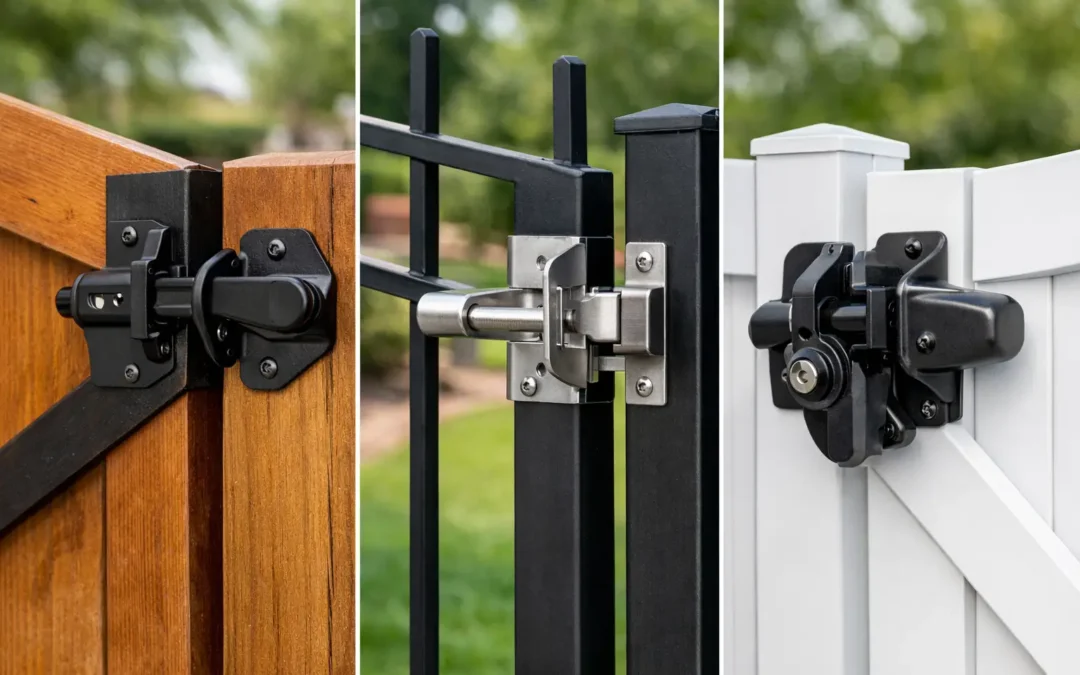
A gate can look perfectly built and still feel unfinished the moment the latch disappoints. If it rattles, sticks, slams, or looks like an afterthought, the whole fence loses polish. That is why custom fence gate latch options matter more than most property owners expect. The right latch does more than keep a gate closed – it shapes how the gate feels in daily use, how secure it is, and how well the design holds together from a visual standpoint.
For homeowners and property investors upgrading exterior spaces, the latch is where function and finish meet. It is one of the few parts touched every day, so poor choices show up quickly. A well-chosen latch should match the gate material, the swing direction, the level of privacy or security needed, and the overall architectural style.
What custom fence gate latch options really change
When people think about a custom gate, they usually focus on the frame, pickets, infill, height, and finish. The latch tends to get chosen at the end. In practice, it should be part of the design conversation early, because it affects spacing, reinforcement, alignment, and how the gate operates over time.
A simple latch may be enough for a decorative garden gate with light use. A side-yard gate securing access to a backyard, pool area, or service path usually needs more. In commercial or multi-unit settings, ease of use and controlled access become even more important. The right solution depends on who uses the gate, how often they use it, and what happens if it is left unlatched.
This is also where custom fabrication offers a real advantage. Instead of forcing a standard hardware piece onto a premium gate, the latch can be selected or built to suit the proportions, weight, and finish of the gate itself.
The main custom fence gate latch options to consider
Gravity latches
Gravity latches are common because they are simple and reliable. They use a dropping arm or catch that falls into place when the gate closes. On residential fences, they are often used for convenience and quick operation.
Their strength is ease of use. They work well on lighter gates and in spaces where people want a straightforward open-and-close action. The trade-off is security. A basic gravity latch is usually better for containment and convenience than for serious access control. If appearance matters, the proportions and finish need attention, because off-the-shelf versions can look too utilitarian on a custom gate.
Thumb latches
Thumb latches bring a more classic, crafted look. They typically allow entry from one side by pressing a thumb piece that lifts the latch bar on the other side. On ornamental metal gates, they can feel intentional and architectural rather than purely functional.
They are a strong choice when aesthetics matter and the gate is part of the front-facing design of the property. Still, they are not always the best answer for higher-security needs unless paired with a locking mechanism. They also need precise fabrication and installation to avoid binding over time.
Slide bolt and barrel bolt latches
Slide bolts and barrel bolts are often used as secondary latching points rather than the primary everyday latch. They are practical for keeping one side of a double gate fixed or adding a simple manual lock point.
For custom gates, these can be integrated cleanly, especially on metal frames. The downside is convenience. They usually require manual alignment and are less ideal as the main latch for frequently used access points. They are effective, though, when stability matters more than speed.
Locking latches with keyed access
If security is a priority, keyed latches deserve close attention. These systems combine the function of a latch with a lock cylinder, giving property owners more control over who can enter.
They are often the right fit for side-yard entries, pool enclosures, and commercial perimeter gates where access should not be casual. The main consideration is balancing security with user experience. A keyed latch that is awkward in rain, snow, or low light can become frustrating. Good hardware selection and proper placement make a big difference here.
Magnetic latches
Magnetic latches offer a cleaner, more modern operation. They use magnetic force to pull and hold the gate closed, and many are designed to self-latch reliably even when alignment is slightly less than perfect.
These are especially appealing on contemporary properties where a minimal look matters. They can also perform well in family settings because they close consistently. That said, product quality matters. Lower-grade magnetic systems may not hold up the way premium gates should. On heavier custom metal gates, the latch has to be matched carefully to weight and usage.
Ring latches and decorative forged latches
For properties where design character matters as much as closure, decorative forged latches or ring latches can become part of the visual identity of the gate. These are often selected for wrought iron gates, courtyard entries, or homes with more traditional detailing.
They deliver presence and craftsmanship, but they are not always the most discreet or high-security choice. The best use case is where the gate is a design feature and the hardware should feel custom rather than hidden.
Matching the latch to the gate material and style
Not every latch works equally well on every gate. A sleek horizontal-slat metal gate with a matte black finish usually benefits from low-profile hardware with clean lines. A more ornamental wrought iron gate may call for a latch with visible detailing and hand-forged character.
Weight matters too. Heavier gates place more demand on hinges, posts, and latch alignment. A latch that works fine on a light wood gate may feel flimsy on a fabricated steel or aluminum gate. This is where professional planning helps. The latch should not be chosen in isolation from the frame, post structure, and expected gate movement.
Finish is another detail people notice once the project is installed. If the latch finish does not match or intentionally coordinate with the rest of the gate hardware, the mismatch can make a premium installation look pieced together.
Security, safety, and everyday use
The best latch is rarely just about looks. It should match the level of security and safety the property needs.
For a decorative side gate, convenience may be the top priority. For a backyard gate used by children and pets, dependable self-latching performance may matter more. For a pool gate, code and safety requirements can shape latch height, release function, and self-closing behavior. For commercial properties, you may need something that supports restricted access, repeated use, and long-term durability.
This is why custom fence gate latch options should be evaluated in context. A beautiful latch that frustrates users will not feel premium for long. A highly secure latch that disrupts the clean design of the gate may also feel like the wrong choice. The goal is to get both right.
Why custom fabrication changes the result
A custom gate project works best when the latch is treated as part of the engineered solution, not an accessory added after fabrication. That allows the gate to be built with proper reinforcement, clearances, and hardware placement from the start.
It also opens the door to better visual integration. The latch can be selected to complement the geometry of the gate, coordinated with hinges and handles, and finished to suit the full assembly. On higher-end residential and commercial projects, those details are what separate a clean, professional result from something that only looks good from a distance.
At Iron & Glass Designs, that kind of planning is part of the value. When measurements, drawings, approvals, and fabrication are handled through a structured process, hardware decisions support the final build instead of competing with it.
How to choose the right latch for your project
Start with how the gate will actually be used. If it is opened dozens of times a day, ease and consistency matter. If it protects a private area, security moves up the list. If the gate sits at the front of the property and contributes to curb appeal, visual design should carry more weight.
Then look at the gate itself. Its material, thickness, weight, and style all narrow the best options. A light decorative gate gives you more flexibility. A heavy, custom-fabricated metal gate benefits from hardware chosen with structural performance in mind.
Finally, think long term. Outdoor hardware lives through rain, heat, freeze-thaw cycles, and constant handling. A latch should not only look right on installation day. It should continue operating smoothly and holding its finish after seasons of real use.
The best gate projects feel resolved from every angle, and that includes the hardware your hand reaches for first. When the latch is chosen with the same care as the gate itself, the result feels stronger, cleaner, and far more complete. If you are investing in a custom fence, this is one of the details worth getting right the first time.