
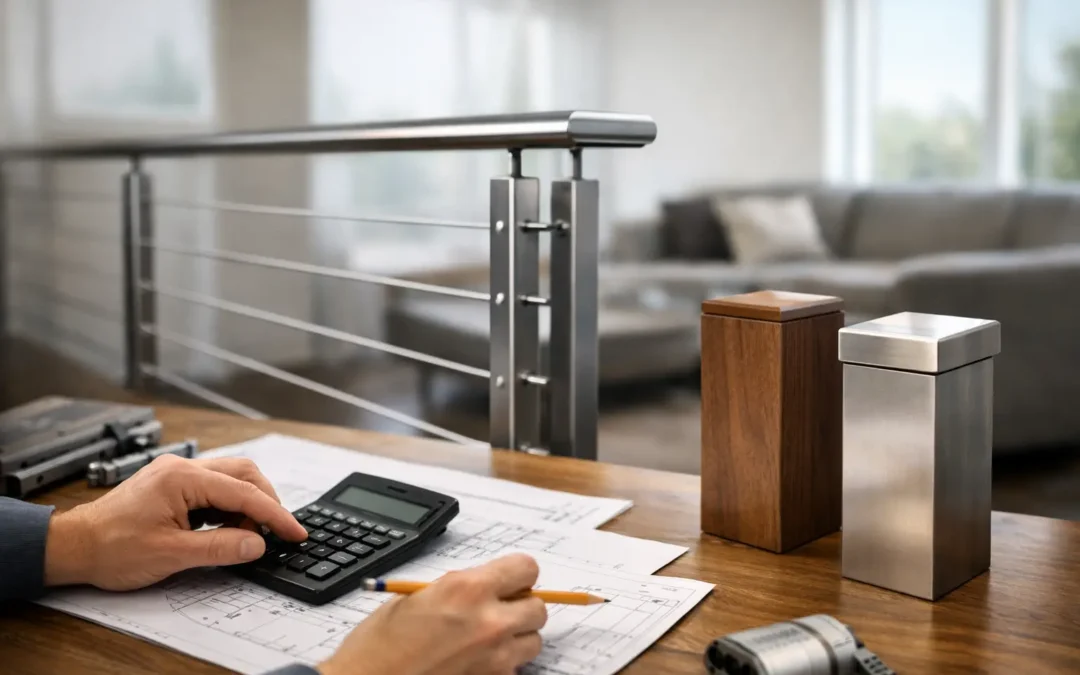
A railing can look simple on paper and still become a very different project once it reaches the site. A straight interior handrail with clean wall brackets is priced one way. A frameless glass system on a balcony, with custom posts, engineered details, and tricky access, is another job entirely. If you want to understand how to price custom railings accurately, the key is to price the full build process, not just the visible material.
For homeowners, investors, and contractors, that matters because the wrong number creates problems on both sides. If the quote is too low, quality, timeline, or scope usually suffer later. If it is too high without a clear reason, the project feels inflated. The right price reflects design intent, code requirements, fabrication time, installation complexity, and the level of finish expected from a custom result.
How to price custom railings without guessing
The most reliable way to approach pricing is to break the project into the same stages used to deliver it. Custom railings are not off-the-shelf products. They move from site measurement to design, then approvals, engineering where required, fabrication, finishing, and final installation. Each stage affects the final number.
That is why pricing by linear foot alone often leads to confusion. Linear footage can be a helpful starting point, but it does not account for corner conditions, stair transitions, hardware choices, structural support, or whether the railing is inside a climate-controlled home or exposed to weather year-round. Good pricing starts with dimensions, then adjusts for what those dimensions actually mean in production.
Start with the railing type
Material and system choice shape the budget more than most clients expect. Glass, aluminum, stainless steel, and wrought iron all behave differently in design, fabrication, and installation.
Glass railings often carry a higher price because the system includes more than glass panels. You may need base shoe, posts, top rails, clamps, specialized hardware, precise templates, and careful site coordination. Frameless systems usually demand tighter tolerances and cleaner structural planning than framed alternatives.
Aluminum railings can be a smart fit when durability, lower maintenance, and a modern look matter. They are often more budget-friendly than some premium custom steel or frameless glass options, but the price still shifts depending on powder coating, custom profiles, gate integration, and installation conditions.
Stainless steel and wrought iron railings vary widely. A clean stainless assembly with simple lines may be efficient to fabricate, while a decorative wrought iron design with scrolls, custom pickets, or forged details adds significant shop labor. Two railings with the same dimensions can land in very different price ranges based on design language alone.
Price design complexity, not just size
A longer railing is not always the more expensive one. Complexity often costs more than length.
Straight runs are usually the easiest to price and produce. Stairs require more layout time, more precise angle work, and tighter installation sequencing. Landings, turns, radius sections, and multi-level transitions each add labor. If the design includes custom laser-cut panels, integrated lighting, privacy screens, or mixed materials such as metal and glass, the estimate should reflect the added drafting, fabrication, and finishing time.
This is where many underpriced quotes go wrong. They treat a custom project like a standard railing package. A professional estimate accounts for the fact that unique details are exactly what make the result custom.
The cost drivers that change a railing quote
Once the base system is defined, several practical variables move the number up or down. These are the details that separate a rough ballpark from a dependable quote.
Field measurement and site conditions
Custom work begins with accurate site information. New construction, completed renovations, and retrofit projects all present different levels of predictability. If floors are out of level, walls are not plumb, or existing concrete has limitations, installation becomes more involved.
Access matters too. A ground-level porch is easier than a narrow interior staircase in an occupied home. Condo towers, tight hallways, limited parking, and restricted delivery windows all affect labor and logistics. When pricing is done properly, site conditions are not treated as surprises to fix later. They are part of the quote from the start.
Drawings, approvals, and engineering
Premium railing work is not just about appearance. It also has to perform safely and meet code requirements. Depending on the project, that may include shop drawings, client approval revisions, and engineer review and stamping.
These steps should be priced as real project components, not hidden overhead. For residential clients, this creates peace of mind because the design is reviewed before fabrication begins. For commercial clients and contractors, it supports permitting, coordination, and accountability. A quote that includes proper drawings and engineering may look higher at first, but it usually reflects a more controlled and dependable process.
Fabrication labor and finishing
Raw material is only one part of the job. Shop time often has a greater impact on price than clients expect.
Cutting, welding, grinding, polishing, drilling, fitting, and dry assembly all take skilled labor. The cleaner and more refined the finish, the more time is required. A minimalist modern railing often demands exceptional precision because there is nowhere to hide imperfections. Decorative metalwork can also be labor-intensive for different reasons, especially when elements are forged, shaped, or built in repeating patterns.
Finish selection matters as well. Powder coating, brushed stainless finishing, protective treatments for exterior exposure, and specialty colors all add cost based on preparation and material requirements.
Installation time and equipment
Installation is not a simple delivery line item. It is a technical phase that depends on anchoring conditions, tolerances, safety protocols, and the need to protect surrounding finished surfaces.
Exterior projects may require lifts, scaffolding, or weather scheduling. Glass panels may require more crew support for safe handling. If the project calls for core drilling, concrete anchors, waterproofing coordination, or balcony edge detailing, installation pricing should reflect that work accurately.
A practical way to build the price
If you are estimating a custom railing project, it helps to think in layers.
Start with the measured scope. Then define the system type and design intent. After that, add the design and engineering phase, fabrication labor, finish, hardware, delivery, and installation. Finally, include a reasonable allowance for site-specific complexity and project management.
This layered approach does two things. First, it protects the quality of the finished railing by recognizing every stage required to build it correctly. Second, it makes the quote easier for the client to trust because the price is tied to visible value, not a vague lump sum.
When linear foot pricing helps and when it doesn’t
Clients often ask for a price per foot because it feels simple. In early planning, that can be useful for budget conversations. It helps compare broad categories such as aluminum versus glass, or interior railings versus exterior balcony systems.
But once the project moves toward production, per-foot pricing should give way to project-based pricing. A custom stair with returns, posts, glass cutouts, and engineered attachments cannot be priced responsibly the same way as a straight guardrail on an open run. Use linear footage to frame expectations, not to replace detailed estimating.
How to talk about price with clients
The strongest quotes do more than present a number. They show the client what is included and why the process matters.
That means explaining whether the quote covers site measurement, drawings, approvals, engineering review, fabrication, finishing, and installation. It also means being clear about exclusions. If demolition, substrate repair, permits, or special access equipment are not included, that should be stated upfront.
This level of transparency is especially important in custom work because clients are not only buying metal or glass. They are buying accuracy, coordination, safety, and a finished result that fits the space the first time. A lower quote that skips critical steps is not always the better value.
For that reason, many property owners prefer working with a full-service team that handles the process from field measurement through installation. At Iron & Glass Designs, that structured workflow helps clients move forward with more confidence because the design, review, production, and installation stages are aligned from the beginning.
The real answer to how to price custom railings
The real answer is that custom railing pricing should reflect the buildable reality of the project. Material matters, but so do layout, engineering, finish level, site access, code compliance, and installation conditions. If the quote only counts feet and material, it is probably missing something important.
A fair price gives everyone a better outcome. The client gets a railing that looks right, performs safely, and feels worth the investment. The fabricator and installer get the time and scope needed to deliver the standard promised. That is how custom work stays custom instead of becoming a compromise.
If you are planning a railing project, the best next step is to treat pricing as part of the design process. The more clearly the project is measured, drawn, reviewed, and scoped, the more confident you can be that the final number matches the result you actually want.