
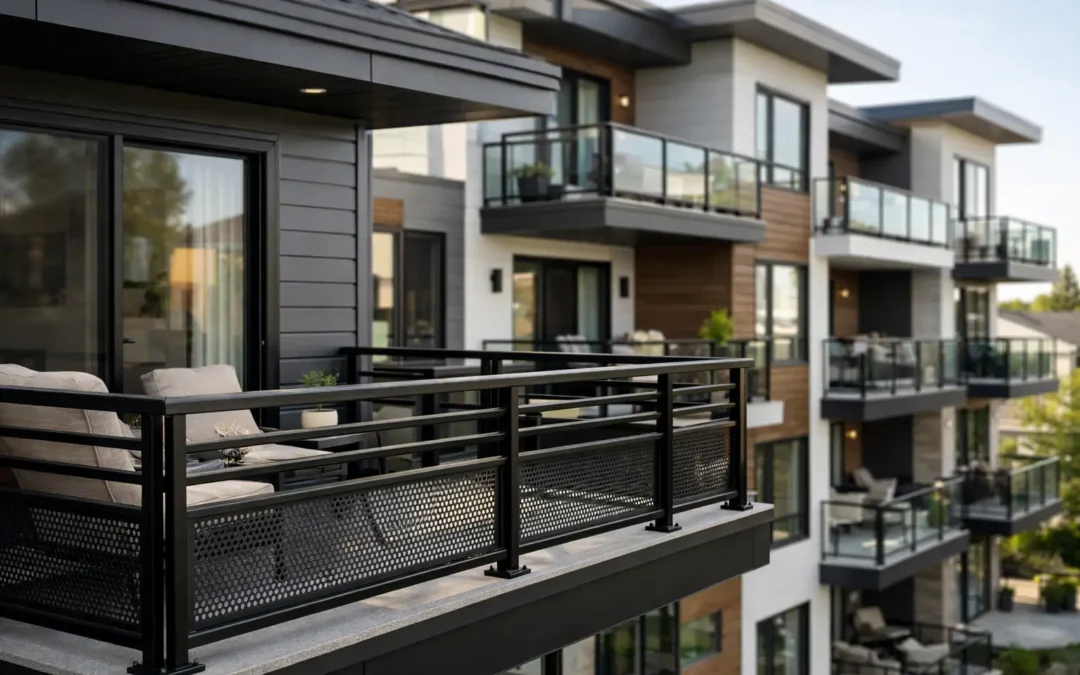
A multiplex balcony does more than give residents outdoor space. It shapes the building’s first impression, affects day-to-day safety, and signals whether the property feels dated or well cared for. That is why choosing a custom balcony railing for multiplex buildings is rarely just a finish decision. It is a building performance decision.
For owners, investors, and contractors, the railing has to work on several levels at once. It needs to meet code, hold up to weather, support the architecture, and still look right from the street. In a multiplex setting, that balance matters even more because one weak design choice gets repeated across every unit.
Why custom balcony railing for multiplex buildings makes sense
Standard railing systems can work in some situations, but multiplex projects usually come with more variables than off-the-shelf products handle well. Existing slab conditions, facade style, unit spacing, drainage details, sightlines, and local code requirements all influence what will actually fit and perform properly.
A custom solution gives you control over those variables. Instead of forcing the building to adapt to a stock system, the railing is designed around the property itself. That often leads to cleaner installation, better visual consistency, and fewer compromises during fabrication.
There is also the long-term value factor. Multiplex owners are not just selecting railings for one household. They are making a repeated investment across multiple balconies, which means material quality, maintenance demands, and durability directly affect operating costs. A railing that looks sharp on day one but stains, loosens, or ages poorly can become an expensive problem fast.
What property owners need from a balcony system
In a single-family home, a railing might be mostly about style and personal preference. In a multiplex building, the priorities are broader. Safety comes first, but safety alone is not enough. The system also needs to support tenant experience, building appeal, and practical maintenance.
A well-designed balcony railing should create security without making the building feel heavy or closed off. It should be strong, stable, and professionally detailed, but it also needs to complement windows, cladding, doors, and the overall facade. In many projects, the best railing is the one that feels like it was always meant to be part of the architecture.
That is where custom work stands apart. It allows owners to choose proportions, post spacing, top rail profiles, infill materials, and mounting methods that suit the building rather than compete with it.
Material choices and where each one fits
Material selection has a major impact on appearance, lifespan, and maintenance. The right answer depends on the style of the property, the exposure of the balconies, and the owner’s budget.
Glass railing
Glass is a strong choice for modern multiplex properties because it keeps views open and gives the facade a lighter, more elevated look. It works especially well on newer builds, renovated urban properties, and projects where natural light and visual openness matter.
The trade-off is maintenance. Glass shows fingerprints, dust, and water spots more readily than some other materials, especially on heavily used balconies. That does not make it the wrong choice, but owners should go in with realistic expectations about cleaning.
Aluminum railing
Aluminum is often the practical favorite for multiplex buildings. It is durable, corrosion-resistant, relatively low maintenance, and well suited to clean contemporary designs. It can also be finished in colors that align with window frames, trim, or other exterior features.
For owners balancing appearance and cost, aluminum often offers a very strong middle ground. It may not have the same visual transparency as glass, but it performs well and can be customized to look refined rather than purely functional.
Stainless steel or wrought iron details
These materials can create a more distinct architectural statement. Stainless steel works well in sleek, modern applications, while wrought iron can add character to traditional or transitional properties.
The key is restraint. On multiplex buildings, repeated decorative elements can either elevate the facade or make it feel busy. Custom fabrication helps control that outcome by tailoring the detail level to the scale of the building.
Design decisions that affect the whole property
A balcony railing is not an isolated feature. It changes how the building reads from the sidewalk and from the parking area. On multiplex projects, consistency matters because every balcony becomes part of a larger pattern.
If the rails are too bulky, the building can feel closed in. If they are too minimal without the right support strategy, they can look underbuilt. If the finish clashes with the rest of the exterior, the property can feel patched together even after a major renovation.
This is why drawings and approvals matter before fabrication starts. Owners benefit from seeing how the railing profile, material combination, and layout will appear across the full elevation, not just on one sample section. Small design choices repeated across several units become highly visible.
Engineering, code, and why process matters
The best-looking railing still fails if it is not engineered properly. Multiplex balconies involve structural loads, attachment conditions, guard height requirements, spacing rules, and local code considerations that must be addressed before production.
This is one of the biggest reasons to work with a company that handles more than fabrication alone. A disciplined process that includes site measurement, project-specific drawings, client approval, and engineer review reduces guesswork. It also helps avoid the common problems that show up when installers are forced to solve design issues on site.
For owners and contractors, that process creates clarity. You know what is being built, how it is being attached, and whether it has been reviewed for compliance before material is cut. That level of planning protects timelines and helps keep the finished system aligned with the building’s actual conditions.
New construction and retrofit projects are different
A custom balcony railing for multiplex buildings is not approached the same way in every project. New construction typically offers more control because attachment points, slab edges, and facade transitions can be planned in coordination with the railing design from the start.
Retrofit work is more nuanced. Existing balconies may have uneven conditions, aging concrete, outdated railings, or waterproofing concerns that influence the mounting strategy. In those cases, field measurement and careful review become even more important. A good custom solution does not hide those realities. It works through them.
That is also where experienced fabrication and installation teams bring real value. A railing can look straightforward in a concept sketch but become much more technical once real building conditions are involved.
Cost is important, but so is lifecycle value
Budget always matters in multiplex projects. The temptation is to compare railing systems only by upfront price, but that rarely tells the full story.
A lower-cost option may require more maintenance, age faster, or create a less polished appearance that weakens the overall property presentation. A better-built custom system may cost more at the start but deliver stronger curb appeal, fewer service issues, and a more durable result over time.
It depends on the property’s goals. For a premium repositioning project, visual impact may justify higher-end glass or refined metal detailing. For a practical upgrade on a rental building, powder-coated aluminum may offer the best return. The right decision is usually the one that fits the building’s use, target tenant, and long-term ownership plan.
Choosing the right fabrication and installation partner
Multiplex owners do not just need a manufacturer. They need a partner who can move the project from idea to finished installation with control and accountability.
That means accurate site visits, clear communication, project-specific drawings, real material knowledge, and installation crews who understand how to deliver a clean final result. It also means being honest about trade-offs. Some designs look impressive in reference photos but are not the best match for a given building, climate, or maintenance plan.
At Iron & Glass Designs, that is where the work begins – by working closely with clients, measuring carefully, reviewing the design in detail, and building a railing system that is both attractive and buildable. The goal is not to sell a generic product. It is to deliver a finished balcony system that feels resolved, secure, and made for the property.
When the process is handled well, residents notice the upgrade immediately. Prospective tenants notice it too. And owners get something more valuable than a new guardrail – they get a building detail that improves safety, strengthens appearance, and supports the property for years to come.
If you are planning a new build or upgrading an existing facade, the right railing should do more than check a box. It should make the whole building look finished.