
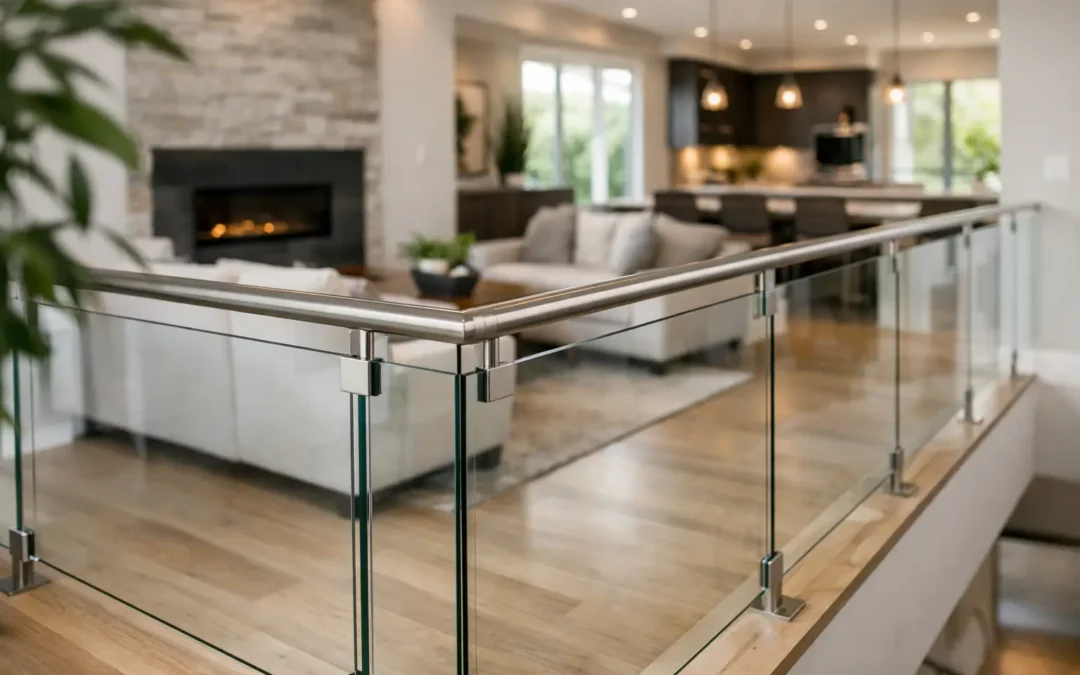
Open-concept homes look their best when nothing interrupts the view – and that is exactly where railing choices start to matter. A bulky wood guard or heavy metal picket system can break up sightlines fast, especially around stairs, loft edges, and second-floor openings. Glass changes that equation. It protects the space without visually closing it off.
For homeowners planning a remodel or finishing a new build, interior glass railing for open concept layouts is often the detail that makes the whole design feel intentional. It supports the airy, connected look people want, but it also has to perform in the real world. Good glass railing is not just about appearance. It needs to fit the architecture, meet code, feel secure under hand, and hold up to everyday use.
Why interior glass railing for open concept spaces works
Open-concept design depends on visual continuity. When the kitchen, living room, dining area, and upper levels are meant to feel connected, every barrier becomes part of the architecture. Traditional railings do the job structurally, but they also create visual stops. Glass keeps those transitions lighter.
That matters most in homes with interior staircases near the main living area, overlook hallways, and mezzanine-style second floors. In these spaces, glass allows daylight to move farther across the home. It also helps premium finishes stand out. If you invested in wide-plank flooring, feature lighting, custom millwork, or a dramatic stair design, glass railing lets those elements stay visible instead of competing with them.
There is also a scale benefit. In smaller homes or narrow floor plans, glass can make the footprint feel more generous. In larger custom homes, it reinforces a cleaner, more architectural look. The effect is different from one project to another, but the core advantage stays the same – you keep safety without adding unnecessary visual weight.
The design payoff goes beyond transparency
Many homeowners start with one idea: glass equals modern. That is true, but it is only part of the story. The best interior glass railing systems are not just transparent panels attached to a stair. They are designed as part of the overall interior language.
A minimalist frameless system can create a crisp, gallery-like feel. A glass railing with metal posts can introduce more structure and definition. A black handrail paired with clear glass can tie into window frames, door hardware, or steel accents elsewhere in the home. If the home leans warmer, the railing can be detailed to complement wood treads or a stained handrail so the final result feels balanced rather than cold.
This is where custom fabrication makes a real difference. Every stair geometry, landing, and opening has its own conditions. A railing that looks refined in photos may feel awkward if proportions, attachment details, or transitions are not resolved properly on site. Working closely with clients on measurements, drawings, and approvals helps turn a strong idea into a railing that actually belongs in the space.
Where glass railing makes the biggest impact indoors
Not every interior location carries the same visual importance. Some areas are worth investing in because the railing is always in view.
The most common is the main staircase. In many open-concept homes, the stair sits right off the entry or central living area. Replacing a heavier guard with glass can immediately make the whole first floor feel brighter and less segmented.
Upper-floor overlooks are another high-impact application. If you have a hallway or loft edge looking down into a living room, glass preserves that connection between levels. Instead of cutting the second floor off with solid railing lines, it keeps the architecture feeling open from every angle.
Interior balcony edges and split-level transitions also benefit. These are often overlooked in the planning stage, but they are exactly the places where sightlines either stay clean or get interrupted.
The trade-offs homeowners should know
Glass railing is a premium-looking solution, but the right choice depends on your priorities. There are real trade-offs, and a good design-build partner should be direct about them.
The first is maintenance. Clear glass shows fingerprints, dust, and smudges more than many other railing materials. In a household with kids or pets, that may mean more frequent cleaning. The upside is that the maintenance is simple. It is mostly about routine wiping, not refinishing or repainting.
The second is cost. Interior glass railing for open concept designs generally costs more than basic wood or standard picket systems because the materials, hardware, engineering, and installation precision are all higher. That said, it often delivers a stronger visual return. In homes where openness and natural light are central to the design, glass tends to look like a considered upgrade rather than an added expense.
The third is feel. Some homeowners want the visual lightness of glass but also want a stronger frame presence for comfort. That is where semi-framed or post-supported systems can be the better fit. Frameless is not automatically the best answer. It depends on the style of the home, the use of the space, and what feels right to the people living there.
Safety, code, and engineering matter more than style trends
A railing is a life-safety element. That should never get lost in the design conversation.
Interior glass systems need to meet code requirements for height, loading, and guard performance. Depending on the project, that may also involve specific attachment methods, tempered or laminated glass requirements, and engineered review. These are not details to improvise during installation.
That is why the process matters as much as the product. Accurate site measurement, project-specific drawings, client approval, and engineering review create fewer surprises later. They also help ensure that what looks clean on paper is actually buildable, compliant, and durable once installed.
For homeowners and property investors, this part is easy to underestimate. A railing can look simple, but simple-looking work usually requires disciplined planning behind the scenes. Precision matters at every step, especially when working with glass, custom stair angles, finished flooring, and adjacent wall conditions.
Choosing the right system for your home
The best railing choice usually comes down to three things: the architecture of the home, how you use the space, and how much visual structure you want.
If your home is highly modern, frameless glass may be the cleanest match. If you want a bit more definition or a lower-maintenance visual rhythm, glass with metal posts can offer that balance. If your staircase is a statement feature, custom handrail detailing may do as much for the final look as the glass itself.
You should also think about how the railing connects to the rest of the house. Does it coordinate with interior doors, flooring, lighting, and trim? Does it make the staircase feel like a feature instead of an afterthought? Good railing design is rarely standalone. It works because it fits the broader material palette.
At Iron & Glass Designs, that is why the conversation starts before fabrication. Site visits, measurements, drawings, approvals, and engineered review are part of building something that looks refined and performs the way it should.
A better result usually comes from a full-service process
Homeowners often compare railing options based on photos alone. Photos help, but they do not show what happens when dimensions are off, approvals are rushed, or installation details are not thought through. That is where projects can lose time, budget, and design quality.
A full-service approach creates more control. The railing is measured for the actual site, not estimated from plans alone. Drawings are tailored to the job. Clients know what they are approving. Engineering review supports compliance. Production follows an agreed design, and installation is scheduled to finish the project properly.
That process is not just for large custom homes. It is valuable on smaller remodels too, especially when the goal is a clean, polished result. Open-concept interiors leave little room to hide mistakes. Every line is visible. Every connection shows.
If you are considering glass railing for a stair opening, overlook, or loft edge, think beyond the panel itself. The right system should protect the space, support the architecture, and feel like it was always meant to be there. When those pieces come together, the railing does more than disappear into the background – it helps the whole home feel lighter, sharper, and more complete.
If your space is built around openness, your railing should respect that idea instead of interrupting it.