
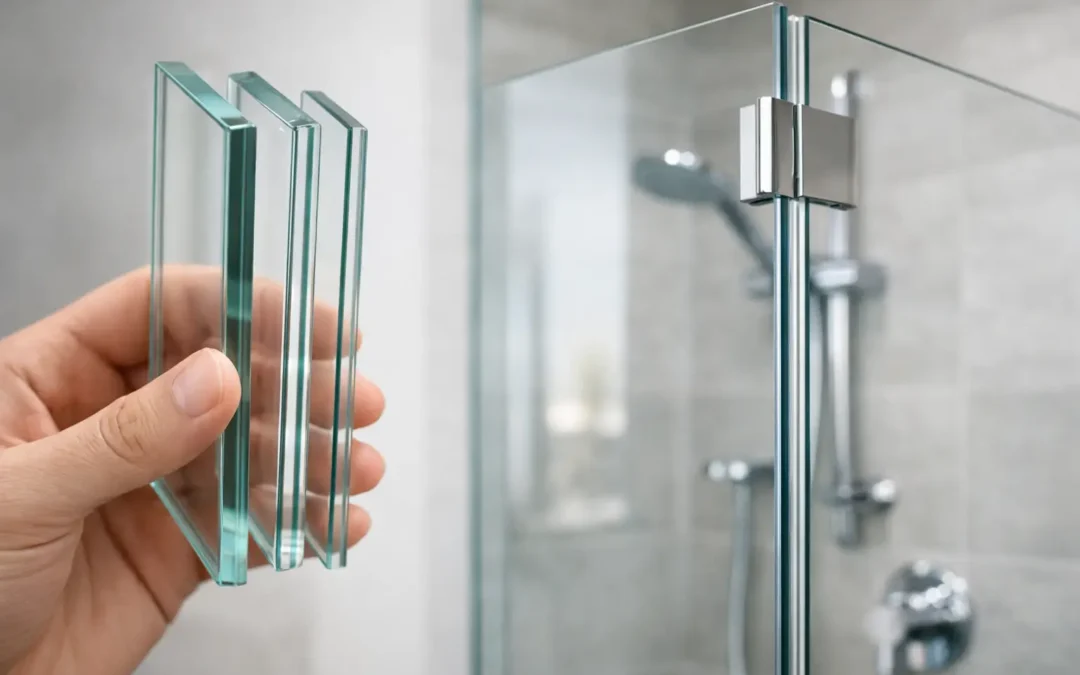
A shower enclosure can look clean and minimal on paper, then feel flimsy or oversized once it is installed. In most cases, that comes down to one decision homeowners do not always think about early enough – glass thickness.
If you are figuring out how to choose shower glass thickness, the right answer depends on more than appearance. Door size, panel width, hardware, layout, and the level of structure in the design all affect what will perform well over time. Thicker glass often feels more substantial and premium, but that does not mean it is automatically the best choice for every bathroom.
How to choose shower glass thickness
The simplest way to think about shower glass thickness is this: the more unsupported the glass is, the more thickness matters. A framed enclosure gets added support from the metal frame, so it can often use thinner glass. A semi-frameless design falls somewhere in the middle. A fully frameless shower, especially one with a wide door or large fixed panels, usually benefits from thicker glass because the glass itself is doing more of the visual and structural work.
In residential projects, the most common thicknesses are 3/8 inch and 1/2 inch for frameless shower glass. In some framed applications, 1/4 inch may be appropriate. Each option can be safe when properly specified and installed, but they create very different results in look, feel, and long-term performance.
That is why this choice should never be made by thickness alone. It should be matched to the design, hardware, and installation conditions.
The most common shower glass thickness options
1/4 inch glass
1/4 inch glass is typically used in framed shower enclosures. Because the frame provides support around the edges, the glass does not need to carry the same visual and structural presence as frameless panels.
The advantage is cost. It is lighter, more economical, and often practical for standard builder-grade or budget-conscious applications. The trade-off is appearance and feel. It does not deliver the same solid, high-end impression that most homeowners want when they are investing in a modern bathroom upgrade.
If your goal is a sleek frameless look, 1/4 inch usually will not be the right fit.
3/8 inch glass
For many custom frameless showers, 3/8 inch glass is the sweet spot. It offers a strong, stable feel without adding as much weight as 1/2 inch glass. It works especially well for standard-sized doors and fixed panels where the layout is straightforward and the spans are not unusually large.
This thickness gives you the clean lines most homeowners want from frameless glass. It feels substantial, looks polished, and usually pairs well with quality hinges, clips, and support hardware.
For many projects, 3/8 inch is the best balance of design, durability, and value.
1/2 inch glass
1/2 inch glass creates a heavier, more luxurious presence. It is often selected for large enclosures, taller panels, oversized doors, and high-end bathrooms where the design is intentionally bold and minimal.
The visual difference is real. Thicker glass tends to look more architectural and feel more rigid. That said, it also increases weight significantly. Heavier glass places more demand on hinges, anchors, and wall conditions, and it can affect how the door operates if the installation is not planned carefully.
In other words, 1/2 inch glass can be an excellent choice, but only when the enclosure and hardware are designed to support it properly.
What actually determines the right thickness
Framed, semi-frameless, or frameless design
This is the first filter. Framed showers can use thinner glass because the metal frame adds stability. Frameless showers depend much more on the glass itself, which is why 3/8 inch and 1/2 inch are common in those systems.
If you are investing in a modern, open look with minimal metal, thicker glass usually supports that goal better both visually and structurally.
Panel size and door width
A narrow shower door and a wide, tall panel do not behave the same way. As glass panels get larger, thickness becomes more important. Large fixed panels need to resist flex. Wider doors need to swing smoothly and feel secure without excess movement.
This is where custom fabrication matters. A thickness that works perfectly in one bathroom may not be the right specification in another if the dimensions change.
Hardware and anchoring
Glass is only one part of the system. Hinges, clips, channels, and handles all need to be matched to the glass thickness and weight. The wall construction matters too. Tile, backing, stud placement, curb design, and adjacent surfaces all affect what can be installed with confidence.
A thicker panel is not automatically better if the surrounding conditions are not built to support it. Good results come from designing the enclosure as a complete assembly, not choosing the glass in isolation.
Style expectations
Some homeowners want the enclosure to almost disappear. Others want it to feel substantial and architectural. Thickness changes that impression more than many people expect.
3/8 inch glass often delivers the clean, modern feel people are after. 1/2 inch pushes the design further into a premium custom look. If you are already selecting elevated finishes, custom metal details, or a minimalist bathroom layout, the thicker option may align better with the overall design intent.
Budget
Cost matters, and glass thickness affects more than the price of the glass itself. Heavier glass can require upgraded hardware, more careful handling, and more installation planning. That can add to the total project cost.
For that reason, the best value is not always the thickest option. It is the thickness that gives you the performance and look you want without overbuilding the enclosure.
Safety matters, but so does proper specification
All shower glass should be tempered safety glass. If it breaks, it is designed to shatter into small pieces rather than dangerous sharp shards. That is the baseline.
But safety is not just about using tempered glass. It is also about choosing the correct thickness for the design, using appropriate hardware, and installing everything precisely. A poorly planned frameless enclosure can create problems even if the glass itself meets basic safety standards.
This is one reason custom measurement and job-specific drawings make a difference. When the enclosure is engineered around the actual opening, wall conditions, and hardware layout, the end result feels more secure because it is more secure.
When 3/8 inch is usually enough
For many homeowners, 3/8 inch is the right answer. If your shower is a standard size, your frameless design is straightforward, and you want a refined modern look without paying for extra mass you may not need, this thickness often checks every box.
It offers a premium appearance, solid daily performance, and practical value. In many custom bathrooms, it is the thickness that makes the most sense.
When 1/2 inch is worth it
1/2 inch glass tends to make sense when the enclosure is larger, the design is more open, or the visual goal is especially upscale. It can also be a smart choice when you want the glass to feel as substantial as the rest of the bathroom finishes.
That said, it should be selected for a reason. If the panel sizes are modest and the layout does not call for the added thickness, 1/2 inch can become an unnecessary upgrade rather than a meaningful one.
A good installer will guide this decision
If you are searching for how to choose shower glass thickness, the best answer usually comes after the space is measured, not before. Photos and rough dimensions can help with early budgeting, but final thickness should be based on real site conditions and a clear enclosure design.
That is where a professional process protects the project. A team that measures carefully, prepares project-specific drawings, reviews the hardware approach, and installs with precision can recommend the right thickness with confidence. That approach avoids the two most common mistakes: going too light for the design or paying for extra thickness that does not improve the result.
At Iron & Glass Designs, we work closely with clients to turn bathroom ideas into buildable, polished enclosures that feel as good as they look. The goal is not to sell the thickest glass. It is to specify the right glass for the space, the style, and the way the enclosure will be used every day.
If you are planning a new shower, think beyond the sample in the showroom. The right thickness is the one that fits the design, supports the hardware, and gives your bathroom that finished, confident look the moment the glass is installed.