
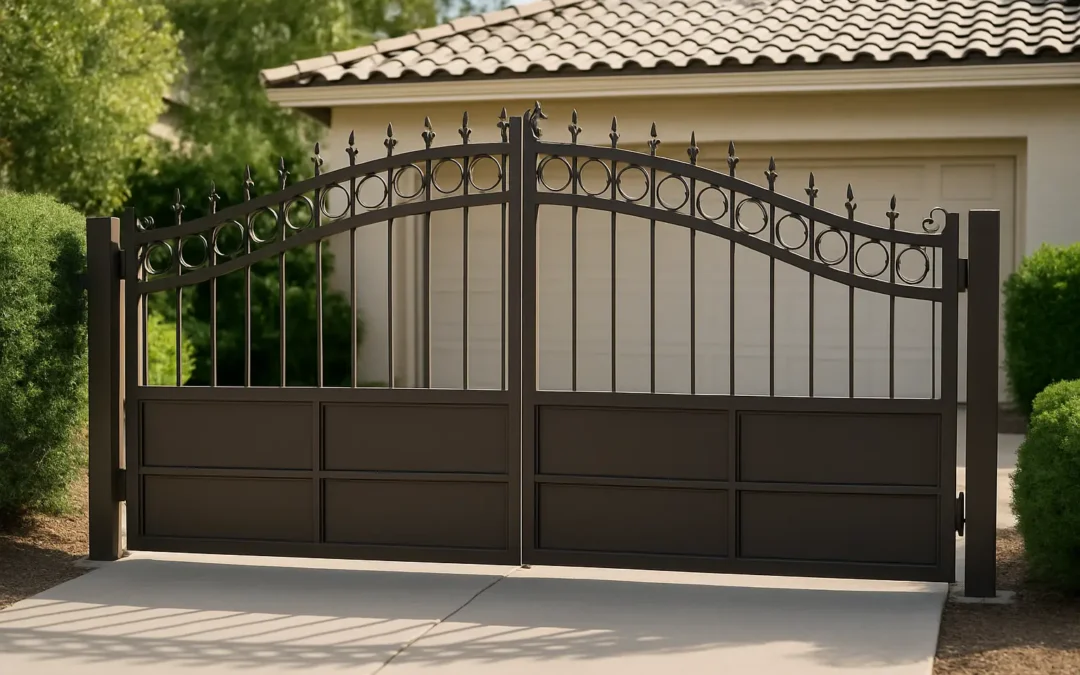
That moment when you pull up to a property and the gate feels like it belongs there – not like it was “added on” – is rarely an accident. The best driveway gates read like architecture. They match the lines of the home, they move smoothly, and they hold up through weather, daily use, and time.
Custom driveway gate fabrication is how you get that result. Not because “custom” is a luxury label, but because driveways are never identical – slopes, widths, clearances, wind exposure, and municipal requirements all change the math. A gate that looks perfect on paper can drag, rack, or fail early if the fabrication and installation plan does not respect the site.
What “custom driveway gate fabrication” really means
A truly custom gate is not just choosing a style and a color. It is a controlled process that starts with measurements and ends with a gate that swings or slides the way it is supposed to – with the right clearances, supports, and hardware for the property.
Fabrication is the build portion, but it depends on decisions made earlier: how the gate will move, how heavy it will be, how it will be supported, and how it will be protected against corrosion. The best projects treat the gate as a small engineered system: structure, movement, safety, and aesthetics working together.
Start with the site, not the catalog
Driveway gates are exposed to the real world: changing temperatures, snow and ice in colder climates, heavy rain, wind loads in open areas, and daily vehicle traffic. The site determines most of what matters.
A few examples of “site realities” that shape the design:
- Driveway slope and crown. A swing gate that works on a flat apron can scrape on a sloped drive, especially with snow buildup. Sometimes a sliding gate is the cleaner solution. Other times, you adjust gate geometry or hinge placement so the leaf lifts as it opens.
- Clear opening and turning radius. It is not only “how wide is the driveway,” but “how do vehicles enter.” Delivery trucks, trailers, and larger SUVs need room to swing in without clipping a post.
- Space behind the gate. Swing gates need room to open inward (or outward, where allowed). Sliding gates need a run of fence line long enough to park the leaf fully open.
- Wind exposure. A solid gate panel looks bold, but it can behave like a sail. In open areas, you may want a more open picket design or reinforced framing and posts.
When the site drives the design, the final gate feels intentional and performs better.
Choose the right movement: swing vs. slide
The “best” type depends on your driveway and goals.
Swing gates are classic and visually balanced, especially in paired-leaf designs. They can be a great fit when you have a reasonably level apron and enough space to open without interfering with parking or sidewalks. The trade-off is that swing gates can be more sensitive to slope and ground conditions.
Sliding gates are often the practical choice for sloped driveways, tight setbacks, or properties where you want to avoid swing clearance. They can also be easier to automate smoothly for heavier designs. The trade-off is you need side space for the gate to slide open, plus a well-prepared track or a cantilever system designed for your conditions.
If you are unsure, that is normal. The right fabricator will walk the site and recommend a layout that protects the gate’s long-term operation, not just its appearance.
Materials and finishes: modern looks that stay that way
Most driveway gates are built around metal because it handles structure and security without bulky profiles. The main choices usually come down to steel (including wrought iron styles) and aluminum, with details that may include glass, wood accents, or laser-cut panels.
Steel offers strength and crisp detail, especially for slim profiles and more intricate work. It is also heavier, which affects hinges, posts, and automation. Steel needs a serious corrosion strategy: proper prep, primer, and a finish system that is appropriate for exterior exposure.
Aluminum is lighter and naturally corrosion-resistant, which can be a strong advantage near water or in areas where road salt is common. It can still look premium, but it may require smart engineering to keep large spans rigid.
Finish is not just color. A gate can be beautifully fabricated and still fail early if the coating system is wrong. Powder coating is popular for clean, modern finishes, but surface preparation matters. Paint systems can also perform well when specified correctly. Either way, you want a finish plan that fits your climate and maintenance expectations.
Design details that separate “good” from “great”
A driveway gate has a big visual job. Small design decisions are what make it feel integrated with the property.
Proportion is the first one. The height, picket spacing, and top line should relate to the home’s architecture and any surrounding fence. Modern homes often look best with clean horizontals or minimalist verticals. Traditional properties may call for more ornament, but it still needs restraint if you want a premium look.
Then there is visibility and privacy. Some clients want a see-through design for safety and openness. Others want privacy. It depends on the neighborhood, the setback, and personal comfort. A smart compromise is partial privacy: denser lower sections with more open upper lines, or strategically placed panels.
Finally, plan for a pedestrian entry if it makes sense. If you find yourself opening the driveway gate just to walk in, adding a matching man gate can make daily life easier and reduce wear on the main system.
Engineering and structure: where reliability is decided
Driveway gates carry real loads. Weight, wind, and repeated motion all add up. This is why fabrication is not only about welds and craftsmanship – it is also about structure.
Posts and foundations matter as much as the gate leaf. A heavy gate hung on underbuilt posts will sag, bind, and fight the operator. Sliding gates need properly aligned guides and stable support so the movement stays true over time.
This is also where “it depends” shows up. A 14-foot gate with open pickets is a different structural problem than a 14-foot gate with solid panels. A property with high wind exposure is a different problem than a sheltered driveway. Good fabrication adapts to those conditions instead of forcing a one-size design.
On higher-end projects, job-specific drawings and engineering review can reduce risk, especially when permits, safety requirements, or automation are involved.
Automation: convenience, safety, and fewer headaches
Most homeowners exploring a custom driveway gate want automation. It is not just about convenience – it is about controlling access without stepping out into weather or traffic.
A good automation plan starts with honest answers:
How often will you use the gate each day? Do you need fast open/close cycles? Is backup power important? Do you want keypad entry, phone-based access, vehicle sensors, or all of the above?
Safety devices are not optional in a well-executed system. Photo eyes and properly placed sensors help prevent contact. You also want manual release options for outages and a layout that makes it easy to service.
Automation also influences fabrication. Operator choice affects hinge geometry, gate weight, and mounting locations. The cleanest installs are planned from the beginning so wiring paths and hardware placement are not improvised at the end.
The build process you should expect
Custom work should feel organized, not mysterious. While every shop has its own workflow, the strongest projects tend to follow a clear progression.
First comes a site visit to measure and confirm layout. Then you should see drawings that reflect the actual conditions and the exact design – not a generic sketch. Approvals come next, because fabrication should not start until you have signed off on what is being built.
After that, production happens in a controlled environment where the gate can be fit-up, welded, and finished properly. Installation is where the craftsmanship becomes real-world performance: posts set correctly, hardware aligned, gates moving freely, and automation tuned so it does not strain.
If you want a partner that handles design, drawings, engineering review, fabrication, and installation under one roof, Iron & Glass Designs follows a structured workflow built around measurements, client approvals, and dependable installation scheduling.
Budget drivers and where not to cut corners
Driveway gate pricing can vary widely because it is not one product – it is design plus structure plus movement plus finish plus installation.
Span and height drive material usage. Weight and complexity drive labor. Automation adds equipment and electrical coordination. Site conditions can add foundation work, trenching, or additional posts.
If you are balancing budget, focus on protecting the things that affect long-term performance: post foundations, hardware quality, corrosion protection, and an automation setup that is correctly matched to the gate. A slightly simpler design with excellent structure often outperforms an elaborate design built to a tight spec with compromised support.
Maintenance: realistic expectations for a premium gate
A well-made gate should not feel fragile, but it will still benefit from light care. Keeping the track area clear (for sliding systems), washing off grime and road salt, and checking that hinges and rollers move freely can extend life.
Finish touch-ups matter, too. If a steel gate gets chipped down to bare metal, sealing that spot early is the difference between a cosmetic fix and corrosion that spreads.
The goal is not constant upkeep. It is predictable ownership: a gate that works every day and still looks sharp years later.
A driveway gate is one of the few upgrades you interact with daily. When you choose custom fabrication that respects your site and is built with the right structure and finish, you stop thinking about the gate – and start enjoying the way it frames the property every time you come home.