
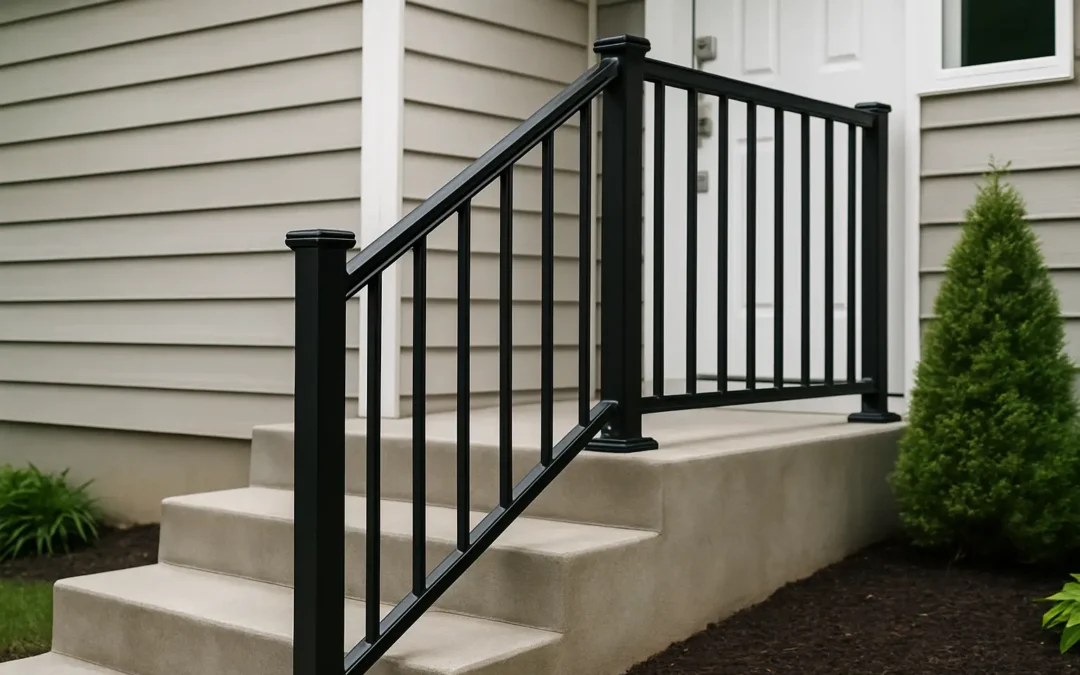
You usually don’t notice an exterior stair railing until it wobbles in your hand, flakes onto the treads, or feels too low when you’re carrying groceries. That’s the moment most homeowners realize the railing is not “trim” – it’s a safety system that takes daily abuse from water, freeze-thaw cycles, sun, salt, and impact.
Exterior stair railing replacement is one of those upgrades that changes how your entry feels immediately: more secure, more modern, and more intentional. The best results come from treating it like a small engineered project, not a quick swap. Materials, anchoring, layout, and code requirements all shape what “right” looks like for your home or property.
When replacement is the smarter choice
Some railings can be repaired, but exterior conditions are unforgiving. If the core structure is compromised, repairs become cosmetic – and short-lived.
If your posts have corrosion at the base where they meet concrete, that’s a common replacement trigger. Rust tends to start where water sits, then spreads under paint. The same goes for wood posts that feel soft at the bottom or show cracking along fastener lines.
Movement is another red flag. A railing that sways under normal pressure often means the anchors are failing, the base material is breaking down, or the post layout never had enough structure. Tightening bolts can buy time, but it rarely fixes the underlying problem.
Finally, if the existing railing doesn’t meet current safety expectations – height, graspability, spacing, or stair-side coverage – replacement is usually more cost-effective than piecemeal modifications that still look dated.
What “good” looks like: safety, feel, and finish
Homeowners often start with aesthetics, and that’s fair. A clean aluminum picket railing or a glass guard can modernize a facade faster than almost any exterior update.
But a truly successful exterior stair railing replacement also feels right in use. The handrail should be comfortable to grip, continuous where required, and positioned so it naturally guides you up and down the run. Posts should feel planted, with no flex at corners or at the top landing where people tend to lean.
Finish is the last piece. Exterior railings live outdoors year-round, so coatings, fasteners, and glass hardware should be selected with corrosion resistance in mind. A beautiful design that stains, chips, or rusts early is a disappointment you’ll see every day.
Material options and the trade-offs that matter
There is no single “best” exterior railing material. There is the best fit for the look you want, the exposure your entry gets, and the level of upkeep you’re willing to tolerate.
Aluminum railings
Aluminum is a top choice for homeowners who want a crisp, modern look with minimal maintenance. It resists rust, holds finishes well, and works for simple picket styles or more contemporary layouts.
The trade-off is that aluminum systems are only as strong as their anchoring and design. You want proper post sizing, correct spacing, and a layout that accounts for leverage at corners and landings.
Steel and wrought iron
Steel (including wrought iron-style fabrication) brings a premium, architectural feel. It’s ideal when you want custom scrollwork, forged details, or a more substantial visual presence.
The trade-off is corrosion management. Steel can last for years outdoors, but it demands the right prep, coatings, and attention to water-trap details. If you love the look, make sure the design avoids places where water can sit and the finish system is built for exterior conditions.
Stainless steel
Stainless can look sharp and modern, especially with cable or glass. It also handles weather better than standard steel.
The trade-off is cost and detailing. Stainless benefits from the right grade and careful fabrication. It also shows fingerprints and water spotting more than you might expect, depending on finish.
Glass railing systems
Glass delivers an elevated look with clean sightlines. It’s especially popular for contemporary homes, raised entries, and properties where you want a more open feel.
The trade-off is that glass systems are less forgiving on installation precision. Posts, clamps, and base channels need accurate layout. You’ll also want to think through cleaning expectations and privacy at the front entry.
Wood railings
Wood can be economical and traditional, and it’s easy to modify on site.
The trade-off is maintenance and movement. Outdoor wood expands, contracts, checks, and needs regular sealing or painting. For long-term value, many owners replace wood with metal, or combine metal rails with wood elements in a more durable hybrid.
Code and compliance: the part you should not guess on
Railing rules vary by jurisdiction, but most code requirements revolve around a few themes: minimum heights for guards, graspable handrail profiles, limitations on openings so a small child can’t pass through, and structural strength.
Stairs add complexity because a system may need both a guard (for fall protection at edges) and a handrail (for support while ascending/descending). Landings, the number of risers, and where the drop-off is located all change what’s required.
If you’re replacing an existing railing, it’s tempting to copy what’s there. The risk is that older railings were often built to outdated standards, or they were installed without proper consideration for current safety expectations. When you’re investing in a new system, it makes sense to build it to today’s requirements so you’re protected – especially if you plan to sell, rent, or permit other exterior work.
The process that prevents headaches
The smoothest projects follow a clear sequence. It’s not bureaucracy – it’s how you avoid surprises when you’re drilling into concrete, matching existing stairs, or working around tight entries.
First comes a site visit and measurement. Exterior stairs are rarely perfectly square, and existing concrete can be pitched or uneven. Accurate measurement is the difference between a railing that drops in cleanly and one that needs field improvisation.
Next is design. This is where you choose the style, post placement, infill type (pickets, glass, cable, panels), handrail shape, and finish. It’s also where practical questions get answered: Where should the gate go? Will the door swing clear? Do you need a second handrail? How will the railing die into the landing?
Then you want drawings for approval. Seeing the layout on paper helps you confirm proportions and catch issues early, like a post landing in the middle of a stair nosing or a handrail ending awkwardly at the top.
For many exterior applications, engineering review is the safety net that validates the design and anchoring approach. It’s also helpful if you’re coordinating with a contractor or preparing for permitting.
Finally, production and installation. A professional install focuses on clean lines, consistent spacing, and rock-solid anchoring. On stairs, the difference between “installed” and “installed well” shows up in the feel when you use it.
What drives cost for exterior stair railing replacement
Pricing is quote-driven because every entry has different conditions. Still, cost tends to follow a few predictable factors.
Material is the big one. Aluminum and straightforward metal picket designs are typically more economical than stainless, custom forged elements, or full glass systems. Glass also adds hardware and handling requirements that impact labor.
The second factor is complexity. More turns, multiple landings, unusual stair geometry, or tie-ins to existing structures increase design and install time.
Anchoring conditions matter too. A railing mounted to solid concrete is different from one mounted to aging brick, stone caps, or patched surfaces. Sometimes the safest approach involves core drilling, specialty anchors, or localized concrete repair.
Finally, finish and customization add value. A standard powder-coated color is different from multi-step paint systems, custom textures, or decorative elements. If you want your entry to feel truly bespoke, those choices are worth it – but they should be planned early so the quote reflects reality.
Common mistakes that lead to regret
The most common problem is underbuilding the structure. Posts spaced too far apart or anchored with the wrong hardware can make a new railing feel cheap within weeks.
Another mistake is choosing a style that fights the house. Ultra-modern glass can look stunning, but if the rest of the exterior is traditional, you may want a transitional design that bridges both. The goal is “upgraded,” not “out of place.”
The third is ignoring water management. Exterior railings fail early when design details trap moisture at post bases, inside hollow sections, or under cap plates. Good fabrication and smart detailing reduce those risks.
Working with a fabricator vs. buying an off-the-shelf kit
Railing kits can work for simple, standard situations. If your stairs are straight, your mounting surfaces are in good condition, and you’re comfortable verifying code requirements, a kit may be a reasonable path.
Custom fabrication shines when the stairs are unique, when you want a higher-end look, or when you need confidence that the final system will be measured correctly, documented, and installed to perform for years. It also matters when your project needs to feel cohesive – matching a gate, balcony railing, or other exterior metalwork.
If you’re looking for a full-service partner that handles measurement, drawings, engineering review, fabrication, and installation, Iron & Glass Designs builds exterior railing systems with a clear workflow that keeps projects controlled from first site visit to final install.
Timing and planning tips that actually help
Exterior work is weather-dependent, but planning can still be simple. If you know you want a railing replaced this season, start early enough to allow time for design decisions, drawings, approvals, and fabrication. Rushing tends to force compromises on style or finish.
Also think about adjacent upgrades. If you’re resurfacing steps, replacing a door, or repairing concrete, coordinate that scope before the new railing is installed. The cleanest installs happen when the mounting surfaces are finished and stable.
If you want one guiding principle, make it this: choose a railing you’ll trust with one hand occupied. When the design looks sharp, the posts feel immovable, and the handrail lands naturally in your grip, your entry stops feeling like a maintenance problem and starts feeling like part of the home you’re proud to walk up to every day.