
A railing is one of the few elements you touch every day and see from across the room. When it looks right, it quietly upgrades the whole property. When it feels wobbly, dated, or out of place, you notice that too. Wrought iron sits in a sweet spot: it can read classic or modern, it can be delicate or bold, and it can be engineered to feel rock-solid.
Below are wrought iron railing design ideas that translate well from inspiration photo to a real, code-aligned install. Some are style-driven, others are problem-solvers for tight stair runs, weather exposure, or privacy needs. The best choice depends on your architecture, your maintenance tolerance, and how you want the space to feel.
Wrought iron railing design ideas that work indoors
Interior railings get judged up close. You see welds, spacing, and finish every time you walk the stairs. That is why good interior ironwork tends to be clean, intentional, and consistent with the rest of the trim and hardware.
1) Simple vertical pickets with a modern profile
If you like contemporary interiors but do not want the “all glass” look, straight iron pickets are a strong option. Keep the pickets evenly spaced, choose a slim profile, and pair them with a crisp top rail. The win here is timelessness: it does not scream one specific trend.
Trade-off: minimal designs show imperfections. This style rewards tight fabrication tolerances and a finish that is uniform from every angle.
2) Horizontal iron rails for a wider visual feel
Horizontal lines can make a stairwell feel longer and more open, especially in narrow foyers. Done well, it looks architectural and intentional.
It depends on your local code and the exact application. Some jurisdictions restrict climbable horizontals in certain settings, especially for guardrails. If you love this look, confirm early that it can be permitted where you live.
3) Iron balusters paired with a warm wood cap rail
Mixing materials is one of the easiest ways to make wrought iron feel elevated. Black iron with a stained oak or walnut cap adds warmth and helps the railing feel like it belongs with hardwood floors.
This is a practical move, too. Wood can be more comfortable to grip in winter months, while iron does the heavy structural work.
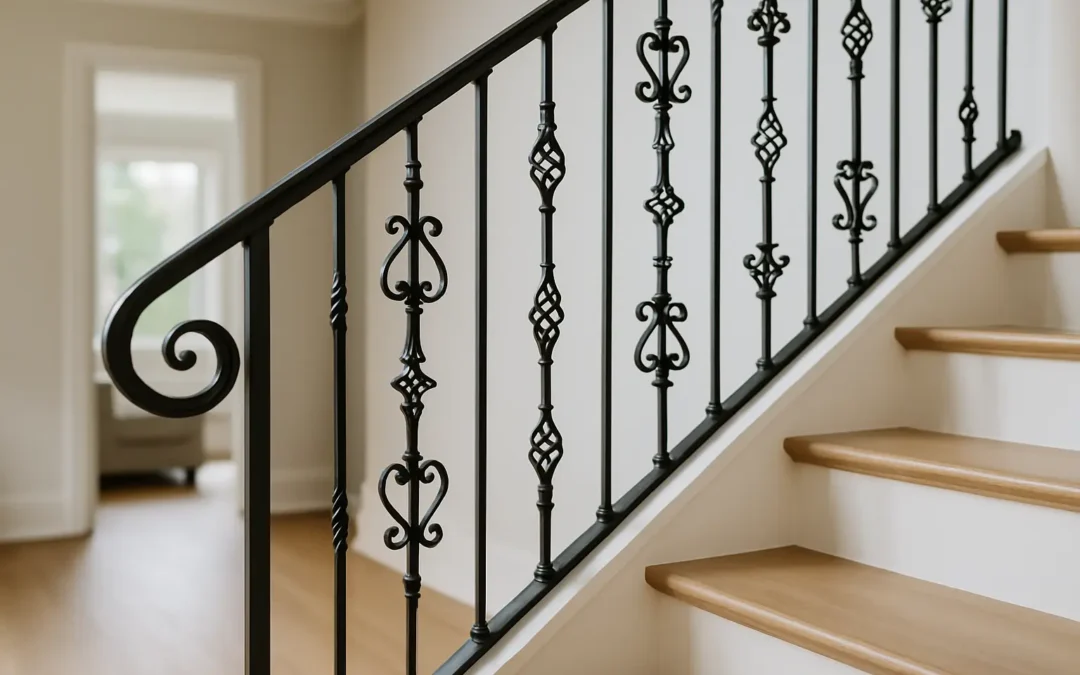
4) Basket and twist details in a “clean classic” layout
Ornamental does not have to mean busy. A simple picket layout with occasional basket or twist elements gives you a traditional nod without turning the staircase into a focal point that competes with everything else.
A good rule: repeat the detail at a predictable rhythm rather than scattering it randomly. Order reads expensive.
5) Curved stair railings that actually flow
Curves are where custom fabrication shines. A curved iron railing can make a staircase feel designed rather than assembled, especially in two-story foyers.
The trade-off is lead time and cost. Curves typically require more shop time and careful site verification. If the stair geometry is changing during construction, wait to finalize fabrication until measurements are locked.
6) Matte black powder coat for a low-maintenance interior
For most interiors, matte black is the safest finish choice. It hides fingerprints, fits with mixed metals (black, brass, chrome), and looks sharp against light walls.
If you want something softer, charcoal or “iron gray” can reduce contrast while keeping the same modern attitude.
7) Integrated wall handrail that matches the guard
On stairs, you often need a graspable handrail even if the guard looks substantial. A matching wall-mounted handrail keeps the space cohesive and can be shaped for comfortable grip.
This is one of those details that feels small until you use the stairs every day. Comfort matters.
Wrought iron railing design ideas for exteriors
Outside, iron has to handle water, sun, salt exposure (in many regions), and freeze-thaw cycles. The design choices that look best are usually the ones that also shed water, avoid dirt traps, and keep the finish protected.
8) Porch railing with wider spacing and a bold top rail
Porches are viewed from the street. A slightly heavier top rail can make the whole entry look more grounded and intentional, especially on homes with substantial columns or stonework.
Keep the infill simple and let the silhouette do the work. If the porch is small, too much ornament will make it feel crowded.
9) Balcony railing with tightened picket rhythm
Balconies often sit at eye level from inside the home, so spacing and alignment are noticeable. A tighter picket rhythm can feel more premium and can increase the sense of safety without making the guard look bulky.
If you care about views, consider where you sit or stand most often. Sometimes the best “view” decision is aligning pickets to land between common sightlines.
10) Iron railing with privacy panels in key zones
If your deck or balcony faces a neighbor, you do not need to block everything. Adding privacy panels only where you need them keeps the space airy while giving you comfort.
You can do this with laser-cut metal panels, perforated patterns, or even frosted glass inserts, depending on the vibe you want. The main consideration is wind load and attachment points, which should be engineered for the specific site.
11) Stair railings with a continuous, graspable return
Exterior steps can be slick in rain or snow. A continuous handrail that returns to the post or wall looks finished and helps prevent sleeves, bags, or kids’ jackets from catching.
This is also a code-friendly detail in many areas. It is the kind of “small” feature that signals the work was done professionally.
12) Traditional scrollwork used as a single focal moment
If your home has heritage character, scrolls can feel appropriate. The key is restraint. Use scrollwork in one panel or at the base of the stairs, and keep the rest clean.
Heavy ornament everywhere can make repainting a chore because there are more edges and recesses where moisture can sit.
13) Two-tone finish: black structure with a subtle highlight
A dark finish with a slightly lighter top rail (or vice versa) can add depth without becoming flashy. This works well on larger façades where an all-black railing might disappear.
The trade-off is touch-up complexity. Two-tone systems require more care if a section gets chipped.
Hybrid ideas: iron with glass, cable, or mixed metals
These designs are popular because they keep the strength and craft of iron while leaning into modern openness.
14) Wrought iron posts with glass infill
If you want a modern look but prefer the feel of metal posts, iron plus glass can be the best of both worlds. Glass keeps sightlines open, while iron frames the system with strong verticals.
This is especially effective on stair landings and balconies where the view matters. It does require clean planning for glass panel sizing, hardware placement, and drainage paths outdoors.
15) Iron frame with minimalist cable sections
Cable can read very modern and can work well on decks or loft-style interiors. An iron frame provides the structure, and cables give a lighter infill.
It depends on maintenance expectations. Cables may need periodic tension checks, and outdoor systems should be designed to minimize corrosion and staining.
Choosing the right idea: what actually drives the decision
Most homeowners start with a look, then reality steps in: code, measurement, and how the railing meets floors, stairs, and walls. The best projects balance all three.
If your goal is a clean modern upgrade, favor simpler picket layouts, thinner profiles, and consistent spacing. If the home is traditional, bring in a small amount of ornament, but let proportion and symmetry carry the design.
For exteriors, prioritize finish quality and water management. A beautiful railing that traps moisture at the base plates or has exposed fasteners in the wrong places will age faster than it should.
And if you are renovating, pay attention to transitions. How the railing starts at the first step, how it turns at a landing, and how it ends at a wall can make the difference between “installed” and “built-in.”
From idea to install: a process that avoids surprises
Great ironwork is not just a shop product – it is a jobsite product. Measurements have to match the real stair pitch, post locations have to avoid conflicts, and the final assembly has to feel solid when you lean into it.
A dependable workflow typically looks like this: a site visit to measure and understand constraints, job-specific drawings so you can approve the design before anything is fabricated, engineering review where required, then production and scheduled installation.
If you are planning a project and want your railing to be both design-forward and code-aligned, Iron & Glass Designs builds custom wrought iron and mixed-material railings with a structured process that keeps the result predictable from the first measurement to the final install.
A helpful closing thought: pick a railing style you will still like when the paint color changes, the furniture changes, and the space evolves – the best design decision is the one that keeps paying you back every time you walk by it.