
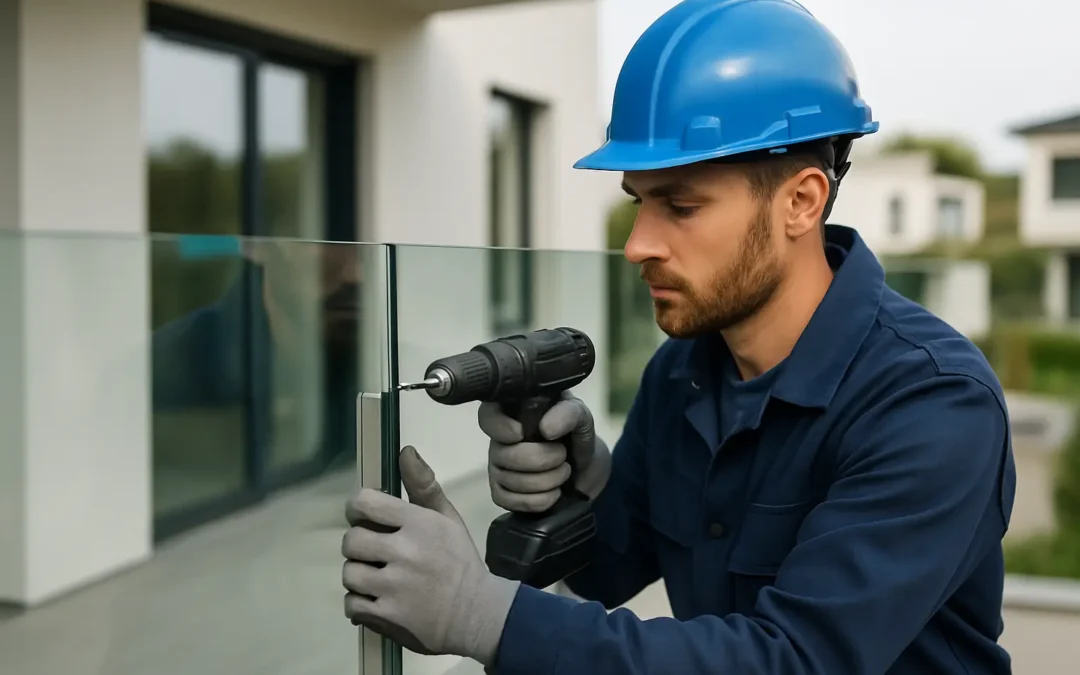
You can usually tell within a few seconds if a frameless glass railing was installed by a team that respects the details. The panels line up cleanly, the gaps feel consistent, the corners look intentional, and nothing rattles when you lean in. On the other hand, a rushed job shows up fast – uneven reveals, wavy sightlines, hardware that loosens, and glass that feels more “decorative” than truly protective.
Frameless glass railings are one of the best ways to modernize a staircase, balcony, or deck without visually chopping up the space. But the “frameless” look is earned, not assumed. It depends on the right hardware system, accurate measurements, job-specific drawings, and an installation that treats structure and code like non-negotiables.
What “frameless” actually means (and what it doesn’t)
A frameless glass railing is not “glass floating in the air.” It’s a structural assembly where the glass is the primary visual barrier, and the support hardware is minimized. Most systems still rely on substantial anchoring into framing, concrete, or steel, because the loads a guardrail must resist are real.
It also doesn’t automatically mean “no top rail.” Some jurisdictions or inspectors allow a truly open top edge when the glass thickness and system testing meet requirements. Others prefer or require a top cap or continuous handrail for feel, durability, and compliance – especially at stairs where a graspable handrail is usually a separate requirement.
In practice, the right design is the one that fits your space, your tolerance for maintenance, and your local code expectations.
The two main frameless mounting styles
Most frameless glass railing installation falls into one of two approaches. The best choice depends on budget, structure, and the look you want.
Base shoe (continuous channel)
A base shoe is a continuous aluminum or steel channel anchored to the deck, slab, or stair stringer area. The glass is set into the channel and secured with clamps or wedges inside the shoe.
This style is popular because it reads as the cleanest “true frameless” look. It also spreads loads along the length of the channel, which can be helpful when the structure underneath is strong but you want a continuous, engineered feel.
The trade-off is that base shoe systems demand precision. The substrate needs to be flat and suitable for anchoring, and layout errors show up as glass that doesn’t sit plumb or consistent.
Standoff pins or point-supported mounts
Standoff systems use individual mounts (usually stainless steel) that bolt through the glass and into the structure. Visually, you get a lighter, more architectural look with distinct hardware points.
This option can be excellent when you have a solid concrete edge, a steel stringer, or blocking that’s been planned for point loads. It can also be easier to service if a single panel needs replacement.
The trade-off is structural planning. Point loads are less forgiving, and misaligned mounting points can force compromises. If you want the finished result to look crisp, the measuring and drilling plan has to be disciplined.
Where most projects go wrong: structure, not glass
Glass gets all the attention, but the real make-or-break factor is what the system is anchored into.
On an exterior deck, for example, homeowners often assume the rim joist or fascia is “strong enough.” Sometimes it is. Sometimes it absolutely isn’t, especially if the deck was built without guard loads in mind. A modern glass guard can expose movement that was always there but previously hidden by wood balusters.
On interior stairs, the challenge is often the stringer and landing conditions. Old framing can be out of level or out of square, and a frameless system doesn’t give you much visual room to hide it. The right approach is not forcing the glass to “make it look straight,” but correcting the conditions and using drawings that anticipate the realities of the site.
If there’s one mindset that produces great outcomes, it’s this: the railing is only as strong as the structure it’s fastened to.
Code and permitting: it depends, so plan for it
Guardrail requirements typically address height, load resistance, and openings. Stairs add handrail rules, and multi-family or commercial spaces may bring additional criteria.
Because code enforcement varies by area, the smartest move is to treat engineering and documentation as part of the product, not an optional add-on. Job-specific drawings help everyone – the homeowner, the contractor, the inspector, and the installer – align on what is being built.
If your project needs permits, engineered and stamped drawings can reduce delays and eliminate on-site guesswork. Even when a permit isn’t required, many owners want the peace of mind that the system has been reviewed like a real safety assembly, not a decorative feature.
The professional workflow behind a clean install
Frameless glass railing installation looks simple when it’s finished. The process behind it should be structured.
First comes a site visit and measurement. This is where the installer checks levels, edges, mounting surfaces, stair geometry, and any quirks that affect glass sizing. For exterior projects, it’s also where water management gets discussed – you don’t want penetrations made casually.
Next are drawings. Good drawings don’t just show where glass goes. They show panel breaks, corner conditions, returns, gate locations if needed, hardware selection, and how the system will be anchored.
Then comes client approval. This is where you confirm the look, the sightlines, and practical decisions like whether a top cap is included. If the client is investing in glass for the view, they deserve to know exactly where seams will land.
Finally, engineering review and stamping (when required or requested) validates the system’s compliance and clarifies installation requirements. After that, production and installation become execution rather than improvisation.
That discipline is the difference between a railing that feels “high-end” and one that just looks like glass.
Glass choices that affect performance and maintenance
Most frameless systems use tempered glass, laminated glass, or a combination that meets local expectations. The right selection depends on location and risk.
Tempered glass is strong and common, but when it fails it breaks into small pieces. Laminated glass includes an interlayer that can help hold the panel together if damaged, which many owners prefer for guards in elevated areas.
Thickness matters too. Thicker glass can reduce deflection and improve the solid feel when you interact with the railing. But thicker glass also increases weight, and weight affects handling, lead times, and sometimes the hardware system you can use.
Then there’s the daily reality: smudges. Frameless glass shows fingerprints and water spots more than you expect, especially on stairs and exterior decks. Some owners choose protective coatings, others prefer a simple cleaning routine. Either way, it’s better to talk about it upfront than to pretend “glass is maintenance-free.”
Interior vs exterior installation: different risks
Interior glass railings are mostly protected from water and freeze-thaw cycles, so the focus is often on alignment, aesthetics, and how the railing integrates with flooring and trim.
Exterior railings have a harder life. Fasteners and hardware must be corrosion-resistant, penetrations need proper sealing, and the system has to handle movement from temperature swings. If your deck sees sun all afternoon, that expansion and contraction is a real design factor.
This is also where choosing the right materials matters. Aluminum and stainless steel components are common in premium systems because they hold up well outdoors when specified correctly. Cutting corners on exterior hardware is one of the fastest ways to turn a clean modern upgrade into a recurring maintenance issue.
Timeline and expectations: what “normal” looks like
Most owners want to know two things: how long it takes and how disruptive it will be.
A straightforward project typically follows a sequence of measurement, drawings and approvals, glass fabrication, then installation. The exact timeline depends on complexity, engineering needs, and fabrication schedules, but the key point is this: glass is made to order. If someone claims they can “cut it on site” for a true frameless guard, be cautious.
Installation itself can be efficient when everything has been planned. The site should be staged to protect floors and finishes, and the team should confirm final dimensions before setting glass. A professional install feels calm and methodical, not rushed.
How to choose the right installer
Most homeowners aren’t looking to become glass experts. You want a partner who can translate your ideas into a buildable, code-aligned railing that looks exactly the way you pictured.
Ask whether they provide a site visit, job-specific drawings, and a clear approval step before fabrication. Ask how they handle engineering review when permits or inspectors require it. Pay attention to how they talk about structure – if they don’t ask what they’re anchoring into, they’re not planning the job.
If you’re comparing quotes, make sure you’re comparing systems, not just square footage of glass. Hardware quality, mounting method, glass type, and installation approach all change the final result.
For homeowners and property owners who want a controlled, professional process from measurement through installation, Iron & Glass Designs is built around that workflow – including drawings, approvals, and engineering review when needed.
A frameless glass railing should feel like a long-term upgrade, not a finishing detail you hope holds up. When the planning is thorough and the installation is precise, you get the payoff every day – clearer views, cleaner lines, and the quiet confidence that the barrier protecting your family and guests is built the way it should be.