
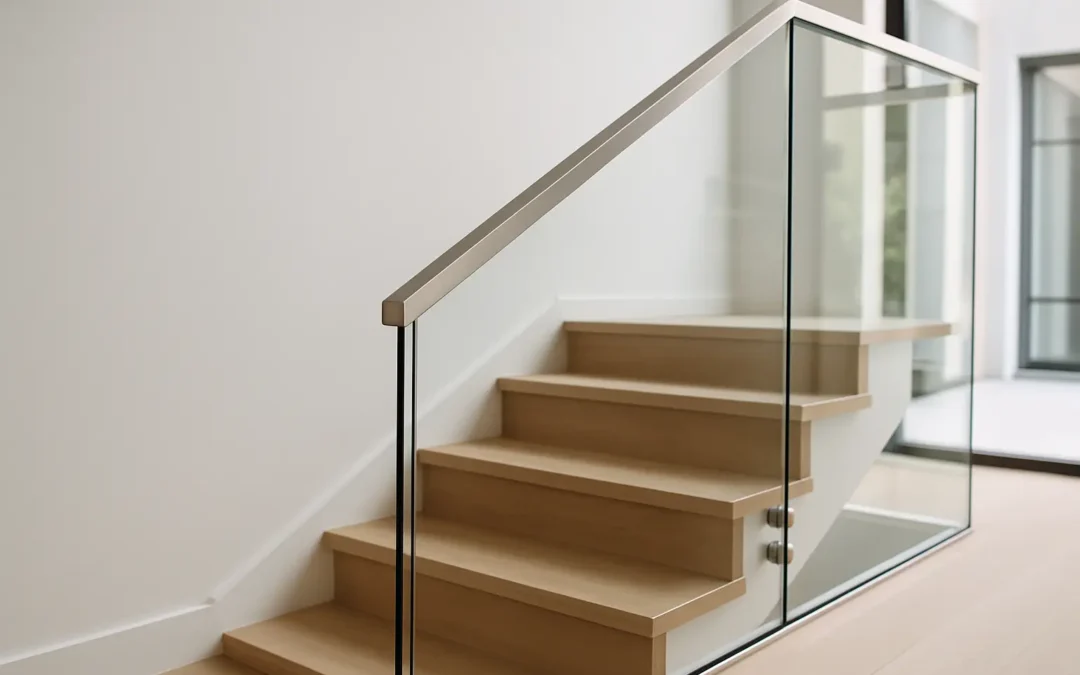
You notice it the first time you walk up the stairs: the railing isn’t just a safety feature – it’s a dominant visual line that frames your entry, your sightlines, and the overall “feel” of the space. If your current railing is bulky, dated, or blocking light, a custom glass railing for stairs can change the entire experience of your home or property without changing the footprint.
Glass on stairs isn’t only about a modern look. Done correctly, it’s about cleaner views, brighter interiors, and a railing system engineered to meet real-world use – kids, guests, tenants, furniture moving days, and everything in between. The key phrase there is “done correctly,” because stairs are one of the most demanding places for glass: tight tolerances, complicated angles, and code-driven details.
Why a custom glass railing for stairs is different from “standard”
Stair railings rarely fit a one-size-fits-all kit. Your rise and run, landing size, stringer style, and how the staircase meets the upper floor all affect where posts can land, how glass panels need to be shaped, and how the handrail will line up.
Customization isn’t just an aesthetic upgrade. It’s the difference between a system that looks good in a photo and one that feels solid under your hand every day. It also affects how clean the final result is. When measurements, drawings, and fabrication are coordinated, the glass aligns properly across the stair flight, the gaps are consistent, and the handrail transitions don’t look like an afterthought.
On a practical level, custom work helps solve common “real home” issues: uneven floors, slightly out-of-plumb walls, changing stair widths, or a landing that isn’t perfectly square. Those details can throw off prefabricated parts quickly.
Choosing the right glass (and why thickness matters)
Most homeowners start with the question, “Is it safe?” The answer depends on the glass type and the system design.
For stair railings, tempered glass is common because it’s heat-treated for strength. Laminated glass is another option that adds a safety advantage: if it breaks, an internal interlayer helps hold it together. In many stair and guard applications, laminated glass is preferred or required depending on local code interpretation and the specific installation method.
Thickness isn’t a place to guess. Glass thickness is selected based on panel size, loading requirements, mounting style (posts vs standoffs vs base shoe), and whether the glass is acting as an infill panel or a primary barrier. Thicker glass can reduce flex and improve the “solid” feeling people want when they grab the rail or lean near the edge, but it can also increase weight and hardware demands. This is where engineering review pays off – not for show, but for performance.
Clear vs low-iron vs tinted: the look you’re really buying
Standard clear glass has a subtle green edge that some people don’t notice until it’s installed next to bright white finishes. Low-iron glass reduces that green tint, which can be worth it in crisp, modern interiors where you want the glass to disappear.
Tinted or frosted glass can add privacy if your stairs face a busy entry, a multi-family corridor, or a street-facing window wall. The trade-off is that privacy finishes reduce the “open” effect that makes glass railings so popular in the first place. It depends on whether your priority is view-through elegance or visual screening.
Hardware and mounting styles: where the design meets the structure
A glass railing is only as good as what it’s anchored to. Stairs introduce vibration, dynamic loads, and narrow mounting surfaces, so the hardware selection matters.
Post systems are a common choice for stair runs because they offer predictable anchor points and can work well with wood, steel, or concrete structures. If you like a stronger architectural outline, posts deliver that – and they can be finished in a way that matches other metal details in the home.
Standoff mounts (glass panels held off the surface by round or square fittings) create a lighter look, but they require precise drilling and a substrate that can reliably hold the hardware. They’re often a great fit for strong stringers or concrete walls, and they highlight the glass as a design feature.
Base shoe systems (a continuous channel at the bottom) create the most minimalist effect because the glass can read as a single clean plane. On stairs, this approach can be beautiful, but it demands careful planning for water management outdoors and very accurate layout indoors. It also calls for the right structure under the shoe, because you’re transferring loads continuously rather than at posts.
The handrail question: minimal, modern, and still comfortable
Many people want “all glass” until they learn what the code expects for graspability and continuity. A handrail isn’t just a top edge you can touch – it needs to be comfortable to grip and continuous where required.
You typically have two directions:
A cap rail sits on top of the glass and creates a clean horizontal line. It’s a popular choice when you want a refined finished edge and a unified look.
A separate handrail mounted to the wall or supported by posts keeps the glass visually lighter. This can work especially well for interior staircases where the wall side can carry a dedicated graspable rail, while the glass side serves as the guard.
The “right” decision depends on your staircase layout, your design preference, and local code requirements. If you’re aiming for a minimalist look, the best approach is usually to design the handrail intentionally from day one, rather than trying to hide it later.
Interior vs exterior stair glass: different problems, different solutions
Interior glass railings are mostly about finish quality, alignment, and daily comfort. Exterior installations add weather, temperature swings, corrosion risk, and drainage details.
Outside, hardware selection becomes more than a style choice. Stainless steel is often favored for corrosion resistance, but grade and environment matter – a sheltered porch is not the same as an exposed rooftop stair. Seals, gaskets, and how water can escape from channels or shoes all affect how the system holds up over time.
If you’re upgrading a rental property, exterior durability is usually the deciding factor. If you’re upgrading your own home, you often want both: a modern look that stays looking modern after years of use.
Code, permits, and the value of engineered drawings
A stair railing has one job you can’t compromise: it must be compliant and safe. Guard height, opening limitations, loads, and handrail geometry are not areas for improvisation.
Where projects get tricky is not the general idea of code, but the specifics of your staircase and structure. For example, a beautiful concept can fail if there isn’t enough framing to support anchors, or if the handrail can’t remain continuous through a turn.
That’s why professional projects rely on job-specific drawings and engineering review when needed. It reduces uncertainty for homeowners and contractors, supports permitting where required, and creates a clear plan for fabrication so you’re not making expensive decisions on site.
What the process should look like (and why it protects your budget)
The smoothest custom glass stair projects follow a disciplined workflow. First comes an on-site visit and measurement, because stairs rarely match what you think they are until you put a tape on them. Then you want drawings that show panel layout, post placement (if used), handrail details, and attachment points. After you approve the design, engineering review and stamping can be completed where required. Only then should fabrication begin, followed by a scheduled installation.
This sequence isn’t paperwork for paperwork’s sake. It prevents the most common cost drivers: remaking glass because a dimension was assumed, relocating anchors because the substrate wasn’t verified, or redesigning the handrail mid-install because it doesn’t meet the practical or code expectations.
If you’re evaluating installers, ask how they handle measurement, what you’ll see in the drawings, and when engineering review happens. The companies that can explain their process clearly are usually the ones that deliver cleaner installs and fewer surprises.
Design trade-offs to consider before you commit
A custom glass railing for stairs is a premium feature, and it’s smart to make choices with eyes open.
Fingerprints and smudges are real, especially on interior stairs near entries. The good news is that maintenance is straightforward, but if you have young kids or high tenant turnover, you may want to choose finishes and layouts that make cleaning easy.
Minimalism can also increase the importance of precision. When the design is simple, every alignment issue is more visible. That’s why craftsmanship and careful layout matter more with glass than with heavier, more forgiving materials.
Finally, budget is affected by panel count, glass type, and hardware. A design with fewer, larger panels can look cleaner, but it may increase glass thickness requirements and handling complexity. More panels can reduce weight per piece and sometimes simplify installation, but it introduces more joints and hardware.
Getting a result that looks great on day one – and still does years later
The best glass stair railings feel almost inevitable, like the home was designed around them. That effect comes from coordination: the right glass, the right mounting strategy, and a handrail solution that’s both comfortable and compliant.
If you want a guided, professional path from idea to installation, Iron & Glass Designs builds custom metal-and-glass railing systems with a structured workflow – site measurement, job-specific drawings, client approvals, engineering review when required, and on-time installation.
A staircase gets used more than almost any architectural feature in a home. When you invest in a custom solution, aim for one that disappears visually, feels rock-solid in your hand, and makes the space look the way you wanted it to from the start – every time you walk up.